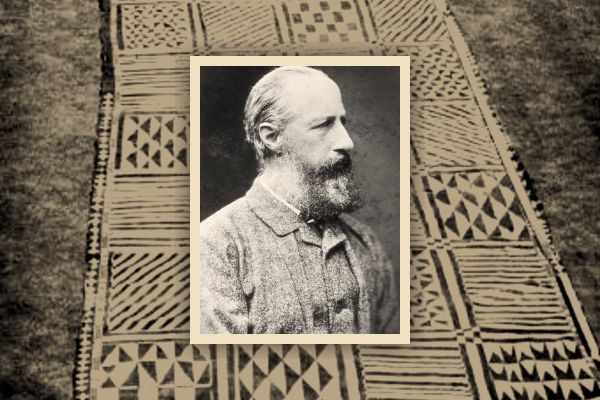
The Framework Gordon Left Behind: Sir Arthur Gordon in Fiji, 1875-1880
Sir Arthur Gordon and the framework he left behind. Read the FPR Portrait.
Sir Arthur Gordon and the framework he left behind. Read the FPR Portrait.
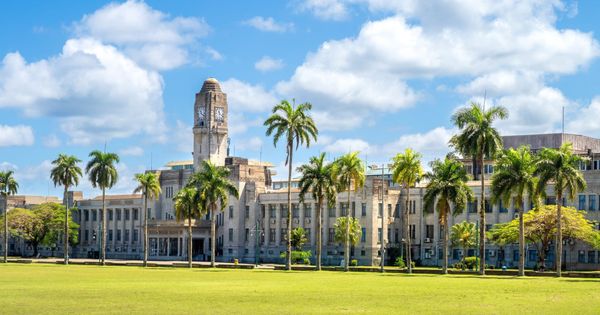
Fiji's first referendum could be held on 9 December. The path there rests on a one-vote margin in Parliament, a counting rule that sits uneasily with the Standing Orders, and campaign rules still to be written.
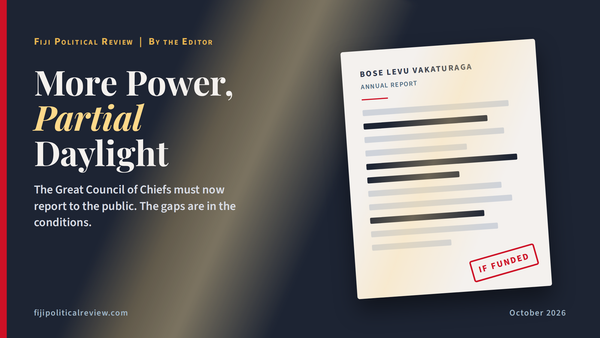
Parliament has given the Great Council of Chiefs new duties to report. Yet those duties are conditional, and Bill No. 32 would soon require the chiefs' own senators to approve any change. The case for completing the paper trail is strongest now.
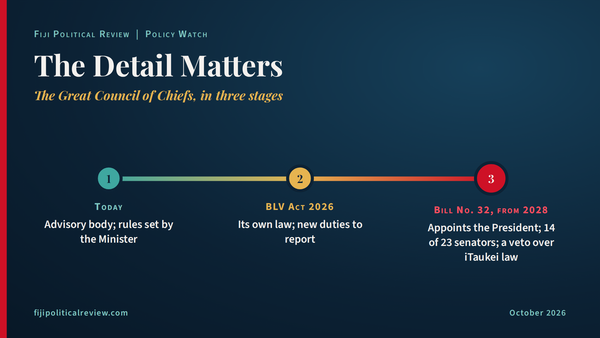
Fiji's Great Council of Chiefs now has a statute of its own, and Bill No. 32 would entrench it in a new Constitution. Together, the two measures shift real power to the chiefs while leaving gaps that will be harder to close after 2028.
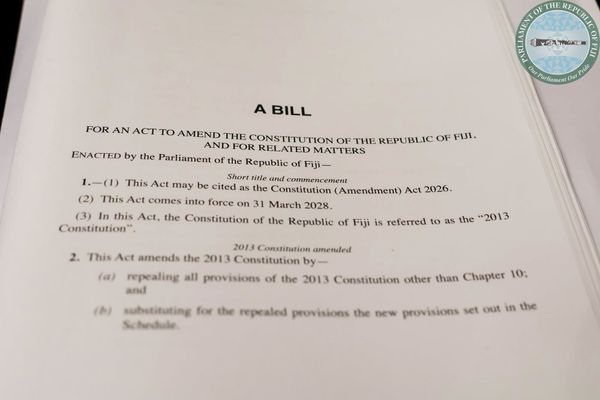
Bill No. 32's immunity clause gives a different end date from its own Explanatory Note. Read against the Constitution Review Commission's report, it also hands chiefly nominees a Senate majority, and may run into the Supreme Court's 2025 Advisory Opinion.
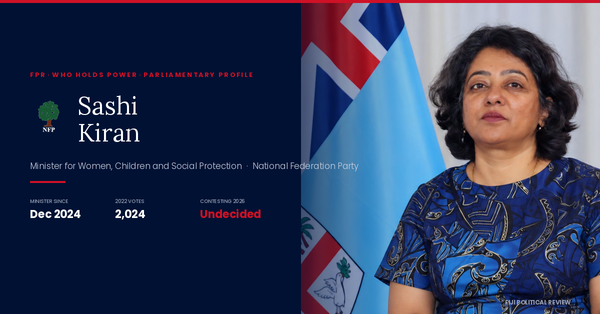
From founding FRIEND Fiji in 2001 to running the Ministry of Women, Children and Social Protection. A profile of Sashi Kiran, one of five women in Parliament.
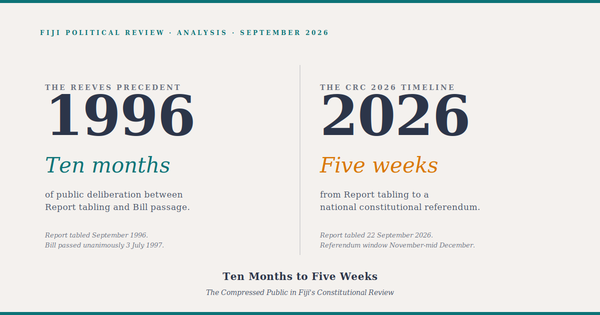
Ten months in 1996. Five weeks in 2026. The CRC Report will be tabled on 22 September. The referendum could be held by mid-December. FPR examines what Fiji's own constitutional practice used to require.
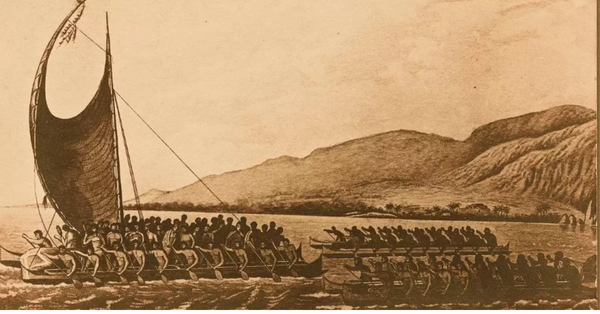
On 10 July 2025, the Māori Queen sat in Lakeba for the installation of the Sau ni Vanua o Lau. A year on from her own accession at 27, Te Arikinui Kuini Nga wai hono i te po is building something at the intersection of chiefly authority and modern economic power. Fiji has reasons to study it.
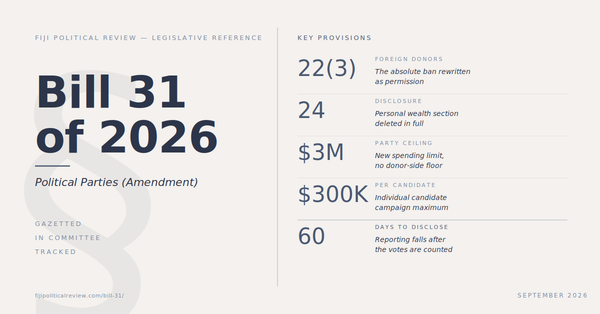
Fiji's foreign-donor ban is one of the strictest in the Pacific. A bill quietly before Parliament would remove it before the writ.
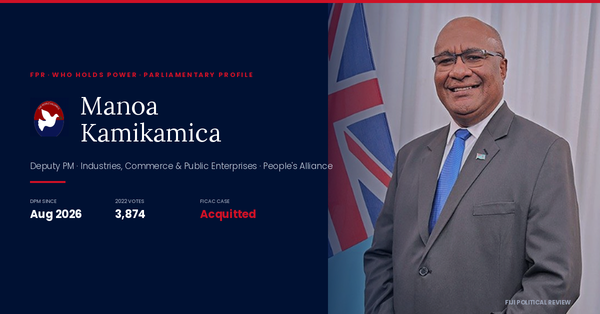
Deputy Prime Minister. Chartered accountant. Founding People's Alliance figure. Nine months on the backbench, and now back at Cabinet with Public Enterprises added to his brief.

The 2013 Constitution protects iTaukei land ownership. It says nothing about who decides what happens on it. That work sits in the iTaukei Land Trust Act 1940 and the Land Use Decree 2010 — instruments that vest control in state bodies. The vanua owns. The Board decides.
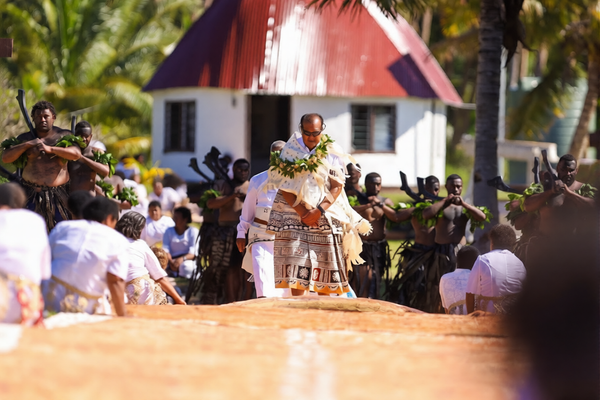
The Tui Nayau's authority is not delegated by the Fijian state. It predates the Fijian state. It has continued through every constitutional order the Fijian state has produced.
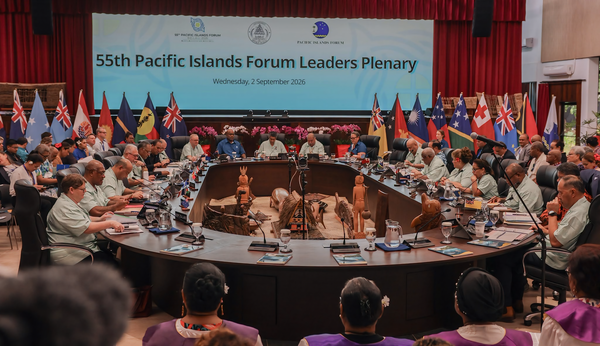
Five Pacific leaders absent, China furious over Taiwan's inclusion. The 55th Pacific Islands Forum in Palau. Republished from The Conversation.
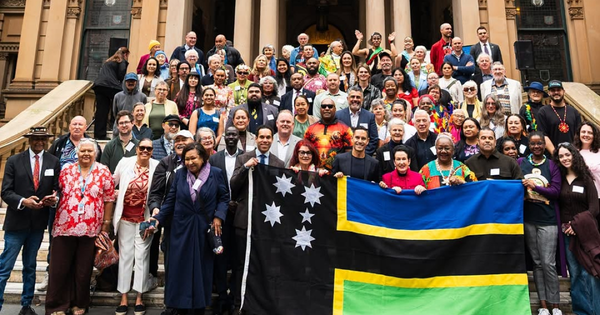
Australia's 32nd Recognition Day arrives seven weeks after the Vuvale Union treaty was signed in Suva. Both share a labour history neither Canberra nor Suva has fully reckoned with.
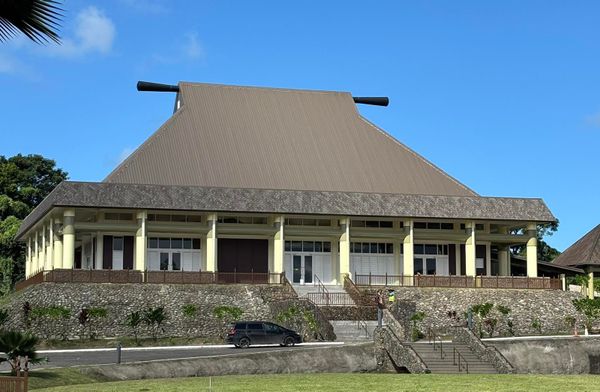
Rabuka sits in the reconstituted Great Council of Chiefs as Prime Minister. He also leads the People's Alliance. Regulation 6(d) doesn't touch him.
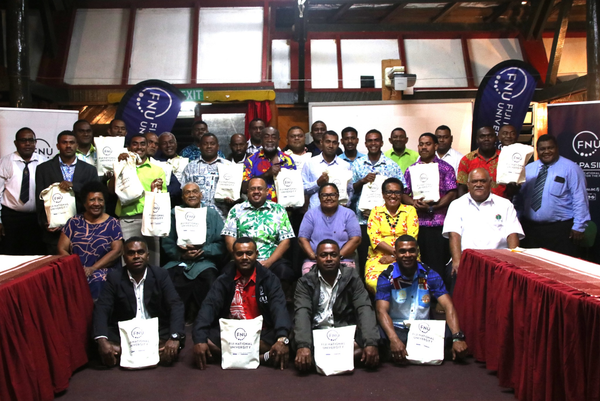
The GCC requires no formal education and no formal leadership record from the chiefs who sit on it. That is not an oversight. FPR examines what the law says and what the institution reveals by funding training it does not mandate.
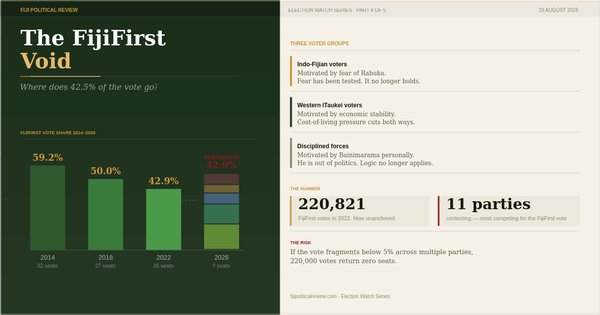
FijiFirst won 59.2% in 2014, 50% in 2018, 42.9% in 2022. Then it was deregistered. The 220,821 votes it carried into 2022 are now unanchored, and at least seven parties are competing to absorb them across three distinct voter groups. Where that vote lands shapes the next Parliament.
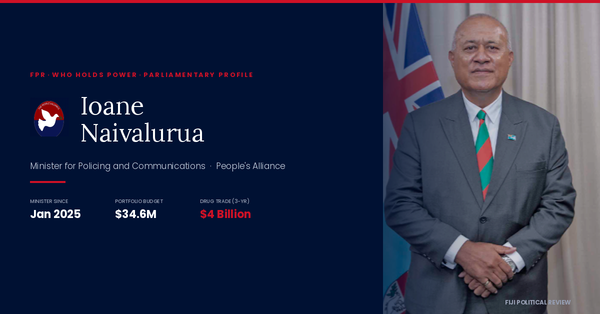
Ioane Naivalurua controls policing and communications as Fiji heads to the 2026 election. Former Police Commissioner. Former Independent. Now inside Cabinet.
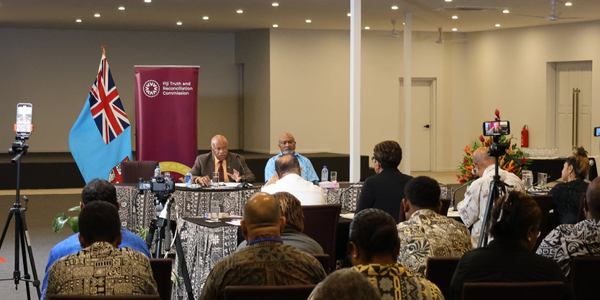
In September 1987, a political settlement was signed. It lasted 48 hours. The Truth and Reconciliation Commission has not yet asked why.
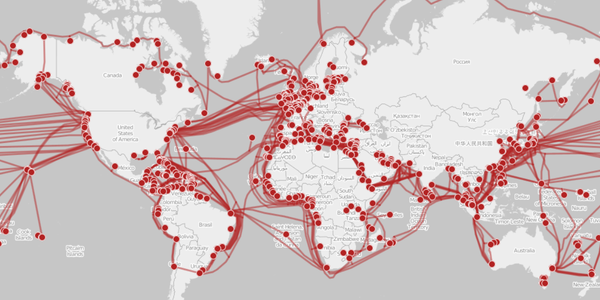
Australia's mandatory AI standards run 3,000 words without mentioning the Pacific. FPR names the structure behind that silence, digital subimperialism, and asks the only question that matters: can the Pacific do to data what it did to the sea?
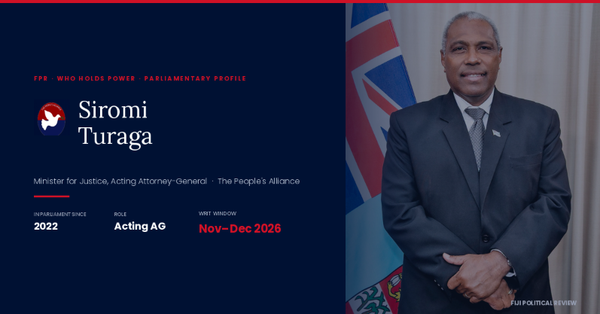
Siromi Turaga holds two of the most consequential levers of Fiji's 2026 election: Acting Attorney-General and the minister responsible for the vote itself.
Three voices from May 2000. Teaiwa and Lal wrote in real time as Speight held Parliament. Chaudhry spoke on 17 May, two days before it happened. Twenty-six years on, none of it has aged out.
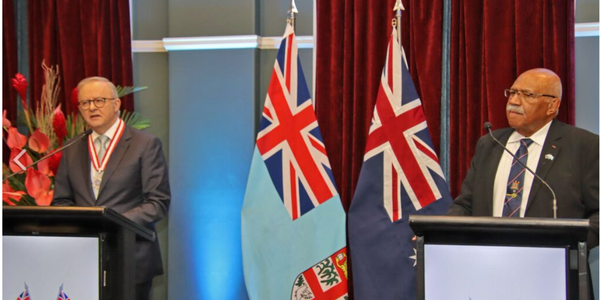
The Vuvale Union Treaty assessed against Fiji's Constitution. Five critical gaps. Parliamentary authority, judicial ouster, and defence sovereignty.
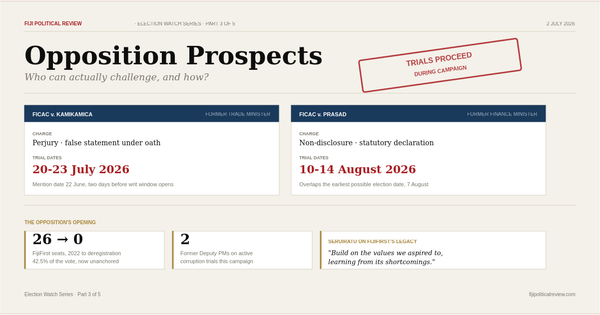
FijiFirst won 42.5% of the vote in 2022, secured 26 seats, and was deregistered. Two former Deputy PMs now face corruption trials during the campaign. The opposition has the opening. Part 3 examines whether it has the organisation to use it.
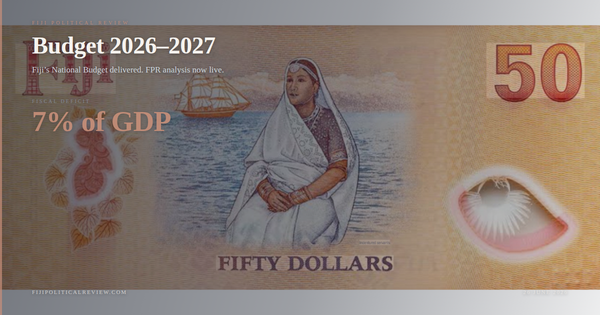
Fiji's 2026–2027 Budget has been delivered. Here's what the numbers actually say.
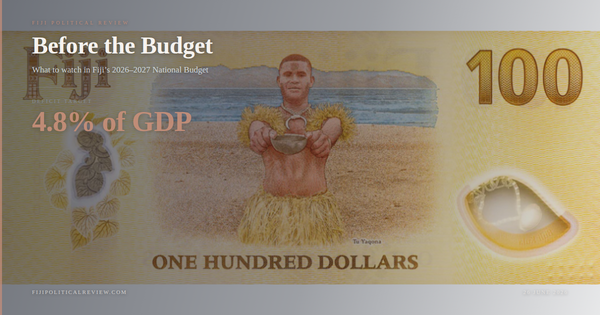
The 2026–2027 budget lands inside Fiji's election window. Here's what the numbers will actually tell you.
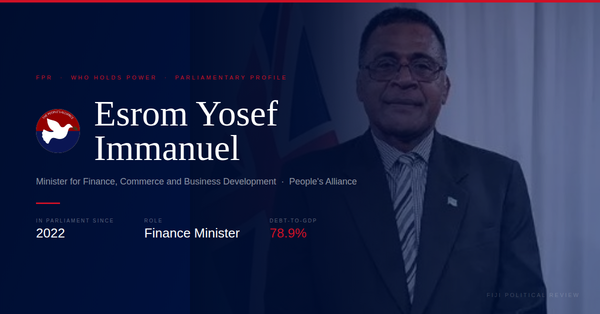
Minister for Finance. People's Alliance. Sworn in October 2025 after Biman Prasad resigned on FICAC charges. His first budget as Minister is due 26 June 2026. The numbers are stable. The room to move is not.

A republic is the most demanding form of government. It requires its citizens and its rulers to want something beyond their own immediate interest. FPR examines what that means for Fiji right now.
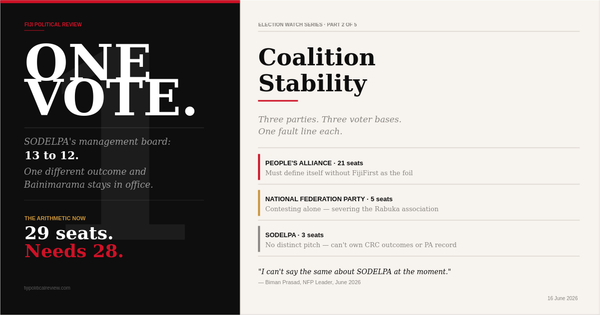
One vote in December 2022 ended sixteen years of Bainimarama. Three years on, that coalition is heading into a campaign where each party's interest in votes competes directly with their collective interest in governing. The fault lines are showing.
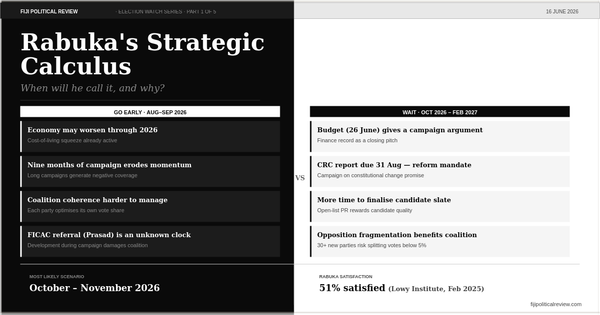
The writ window opens 24 June. Rabuka can call the election any day from here — but timing is strategy. This analysis maps the factors pulling him toward an early poll and those pushing him to wait, the three scenarios in play, and what the date he picks will tell us about where he thinks he stands.
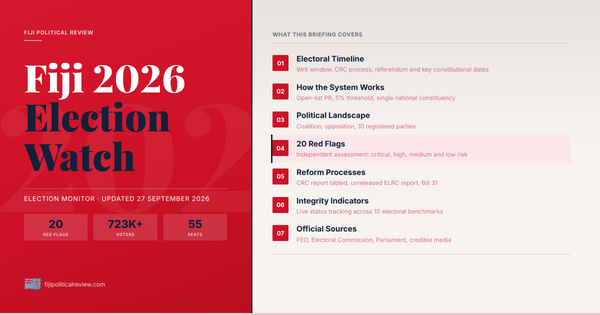
Fiji goes to the polls between August 2026 and February 2027. This briefing tracks the electoral timeline, explains how the system works, maps 20 red flags drawn from Fiji's political history and international monitoring standards, and flags what to watch before the writ drops.
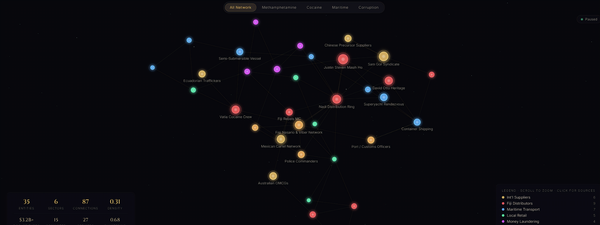
Who connects to whom, where the money goes and where the system breaks down. A timeline tells you what happened and when, but a network map tells you how it works. FPR has built an interactive constellation of Fiji's documented drug trade, 35 entities, 87 connections, every node
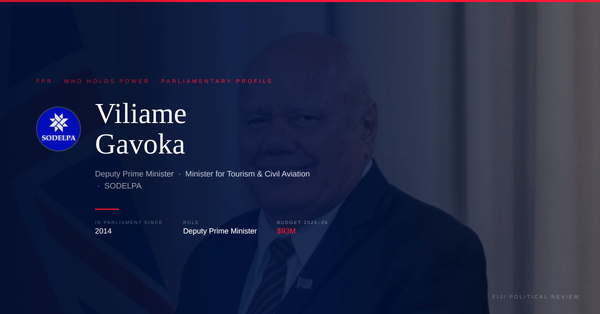
Deputy Prime Minister. Minister for Tourism and Civil Aviation. SODELPA's kingmaker in 2022. One million visitors. $2.54 billion. A profile of the coalition's most senior SODELPA figure.
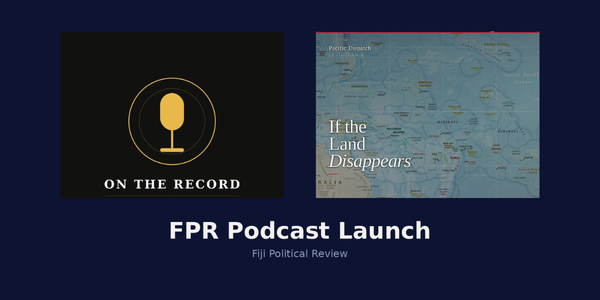
FPR launches two new audio formats: On the Record, our interview podcast, and Pacific Dispatch, our audio essay series. Episode 1 of each is out now on Spotify and Apple Podcasts.
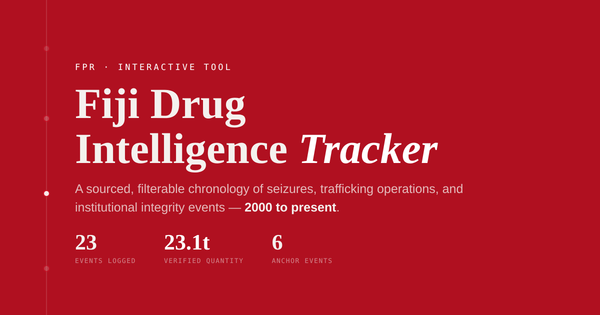
A documented chronology of drug seizures, trafficking operations, and institutional integrity events in Fiji and the Pacific, 2000 to present. Every entry is sourced. Unverified entries are flagged. The tracker covers 23 events across six categories, from Operation Logrunner's 357 kg heroin warehouse in 2000 to the January
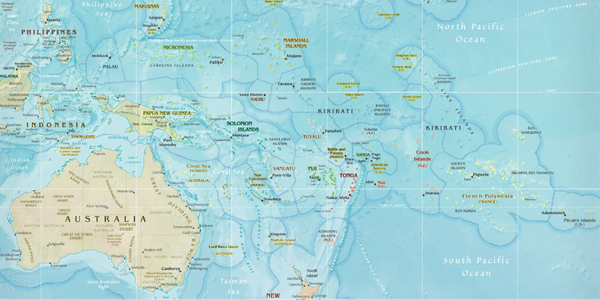
The persistence of the drug trade in Fiji is not primarily a consequence of weak policing. Rather, it reflects the absence of sustained state presence; at sea, within village governance, and in fiscal priorities. Transnational traffickers have been quick to identify and exploit these gaps. Fiji’s maritime communities span
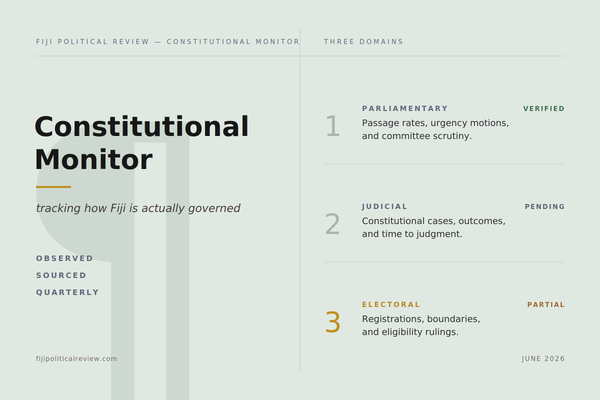
Pacific democracy scholarship has leaned on constitutions, election results, and historical narrative. Very little tracks what institutions actually do over time. The Monitor is our attempt to close that gap.
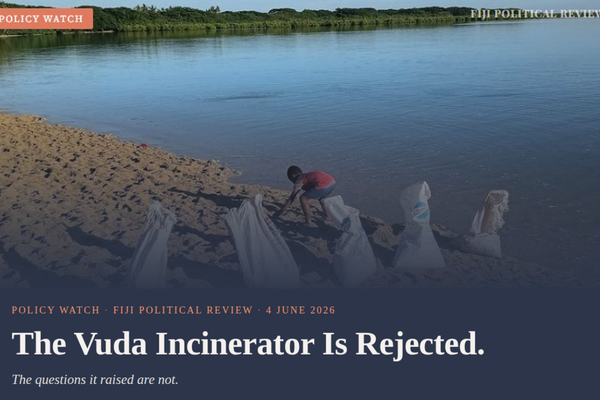
The Ministry of Environment and Climate Change said no. After a 1,500-page EIA, submissions and petitions, TNG Fiji's proposed 900,000-tonne waste-to-energy plant at Vuda has been rejected. TNG has until 3 July to appeal.
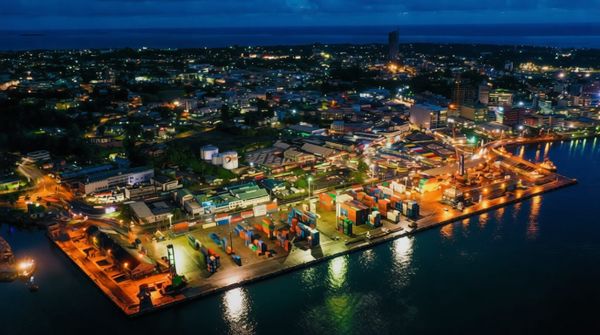
On 25 May, the Vuvale union appeared on the Fiji Parliament's order paper. The next day, the Quad named Fiji pilot for its first joint infrastructure project. The timing was coincidental; the architecture it exposed was not. They reveal how Fiji's strategic position is being shaped, and by whom.
The government has allocated funds for a referendum without a legal framework. The Finance Minister confirms the budget is in place. The Supervisor of Elections confirms she cannot act on it.
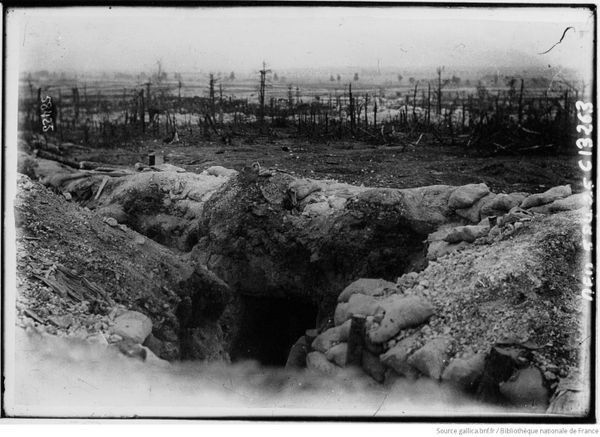
In 1914, the British Army refused him. So he crossed the Channel and joined the French Foreign Legion instead.
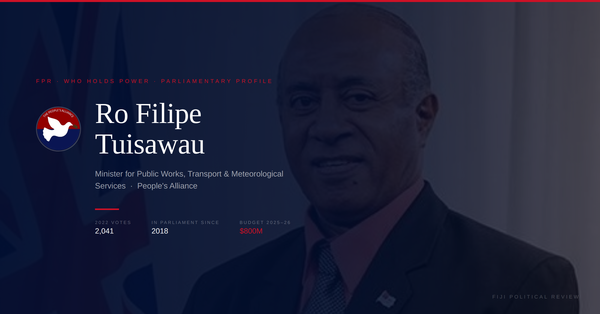
Minister for Public Works, Transport & Meteorological Services. Deputy Leader, People's Alliance. His portfolio received the largest single budget allocation in 2025–26 — $800 million. A profile of one of the coalition's most senior figures.
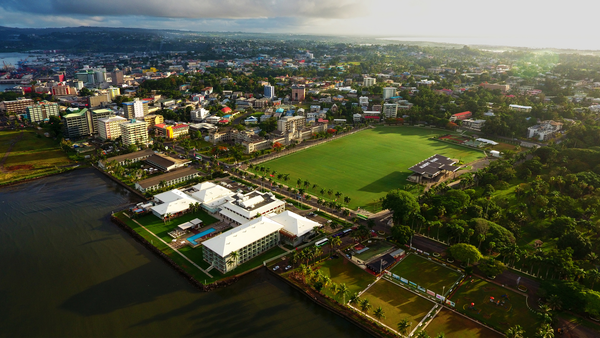
Fiji's municipal councils have been run by government appointees for 21 years. No elections. No accountability to residents. FPR examines what that costs, and what it would take to change it.
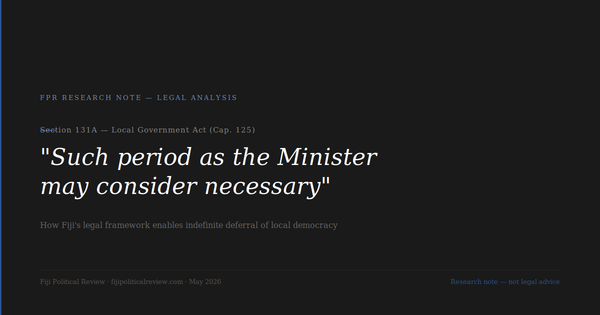
FPR's legal analysis of the instruments governing Fiji's local government election timeline. Finding: no instrument gives Parliament, the FEO, or civil society any formal role. The Minister decides alone.
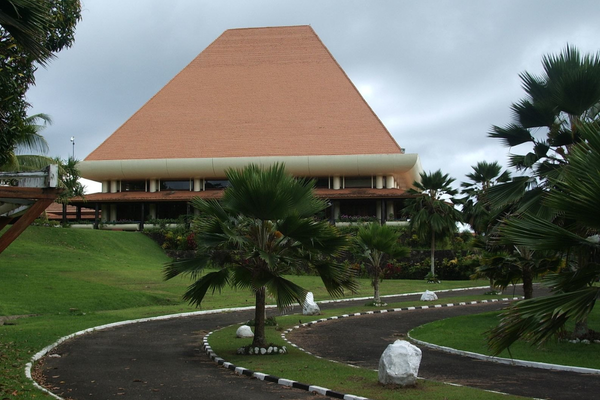
Fiji's constitutional challenge is not a choice between indigenous identity and democratic equality. The question is whether its institutions can protect both at once.
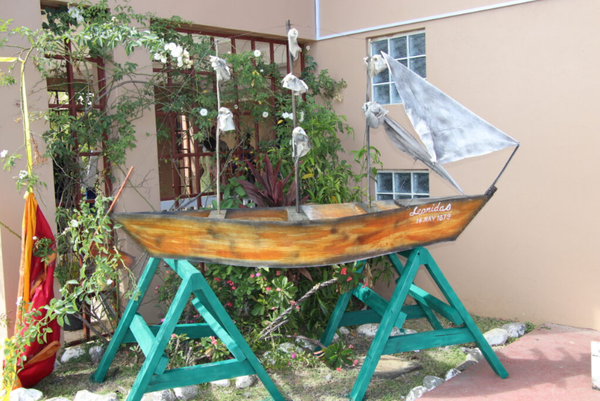
Fiji's 147th Girmit commemoration smoothed indenture into a palatable migration story. The antidote lies in the work of Professor Brij Lal, a historian who insisted on truth before comfort, and paid for it with exile.
Whether Fiji's first local government elections in twenty-one years will proceed in September may be the most consequential democratic question the coalition faces this year.
Cabinet has approved the Vuvale Union. Parliament has not. Under section 51 of the 2013 Constitution, that is a constitutional problem.
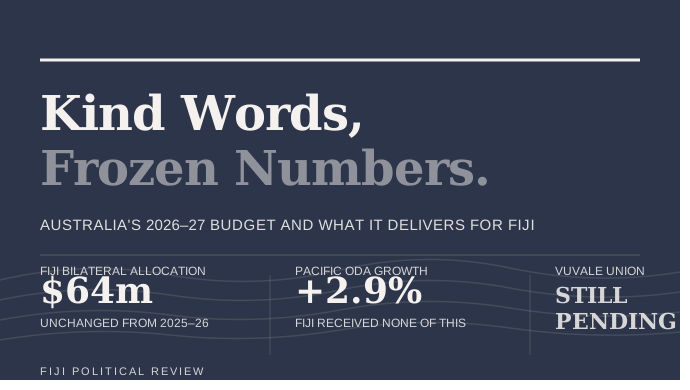
Fiji's bilateral aid allocation is frozen at $64 million while Australia announces a new era in the relationship. The numbers tell a different story to the rhetoric.
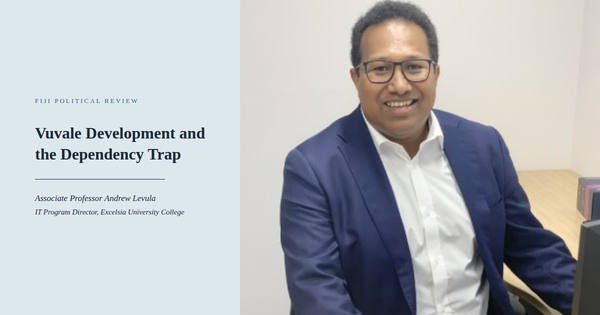
Is Fiji building genuine self-reliance — or deepening dependency? Associate Professor Andrew Levula calls for strategic investment in human capital and a return to Pacific values of discipline and preparation.

Fiji's 2026 election could be called as early as August — or as late as February 2027. The government has not announced when. What it decides will reveal whether constitutional reform comes before or after the polls.

An independent annotated reference to the 2013 Constitution — plain language explanations, FPR analysis, and CRC Watch notes. Free and publicly accessible.

Fiji's Parliament unanimously ratified the Pacific Resilience Facility on 29 April — the first significant cross-party vote of the current term. Three observations on what it means, including the $333 million gap between current pledges and the PRF's capitalisation target.

Fiji's Constitutional Review Commission has four months to deliver its final report. Three questions the Fiji Political Review will be tracking.
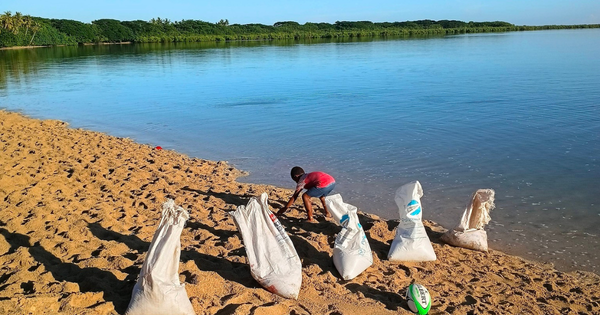
A FJD $1.4 billion waste-to-energy facility proposed for sacred iTaukei land at Vuda Point reached formal EIA stage without secured land consent, without addressing its Australian rejection history, and without a Waigani Convention compliance analysis. The Fiji Political Review asks how.
Why the 2026 CRC must demand the FELRC report — and why the government must release it.
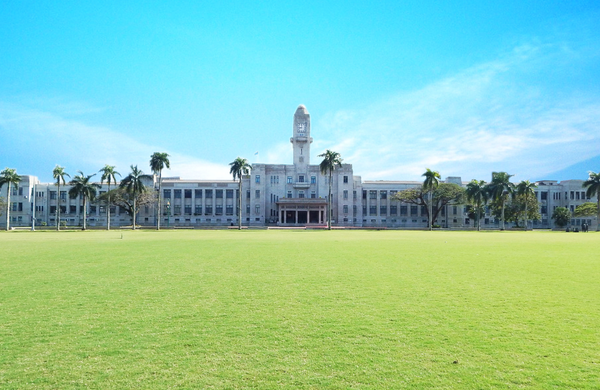
A plain-language breakdown of Bill No. 46 of 2025 — the legislation that will govern how Fijians vote on constitutional change, and why civil society, lawyers and opposition parties say it threatens to make that process hollow.