The Drug Trade as Governance Failure: Why Maritime Fiji Bears the Cost of State Absence

The persistence of the drug trade in Fiji is not primarily a consequence of weak policing. Rather, it reflects the absence of sustained state presence; at sea, within village governance, and in fiscal priorities. Transnational traffickers have been quick to identify and exploit these gaps.
Fiji’s maritime communities span approximately 1.29 million square kilometres of ocean. Rotuma lies closer to Tuvalu than to Suva; the Yasawa Islands extend northwest of Viti Levu, Kadavu sits to the south, and Lomaiviti is dispersed across the Koro Sea. Each region maintains distinct economic systems, dialects, and chiefly structures, yet all face persistent resource constraints. Maritime enforcement capacity remains limited: the Coast Guard Auxiliary operates without dedicated vessels, naval patrols are conducted as intermittent pilot initiatives rather than sustained operations, and village by-laws are largely absent or unenforced.
Traffickers do not target the Lau Group, Kadavu, or Rotuma because these locations are inherently criminal. They target them because they are effectively unmonitored. The state’s maritime presence is too limited to provide meaningful deterrence: shipments can arrive, be stored, and redistributed with minimal risk of interception. Judicial and health infrastructure are similarly sparse; there is no permanent magistrate in the Lau Group, limited clinical capacity to respond to overdose, and policing remains concentrated on a small number of central islands. Cicia, in Northern Lau, lies approximately 230 km from Suva and is accessible only by infrequent flights and a monthly cargo vessel. This level of institutional thinness is not incidental; it is the cumulative result of policy decisions repeated across successive budget cycles.
The World Bank's 2017 Systematic Country Diagnostic for Fiji calls these gaps institutional capacity constraints. In these villages, they are recognised simply as the routine conditions of daily life, not an anomaly, but the predictable consequence of long‑standing neglect.
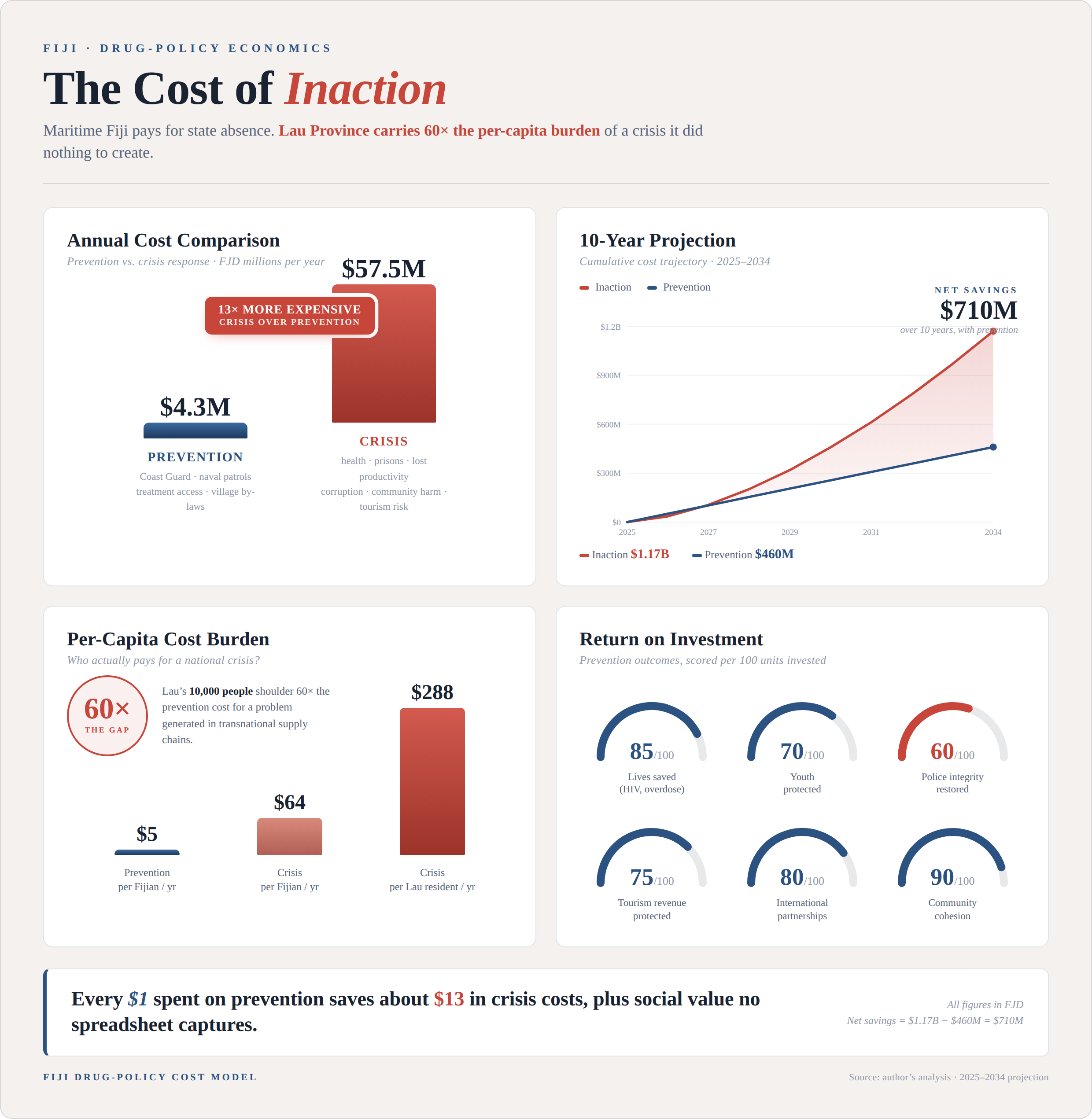
The data in Figure 1 shows that prevention costs FJD $4.3 million while crisis costs FJD $57.5 million. This is a ratio of 13 to 1. Prevention is one budget line that a minister must sign and a journalist can question, while a crisis is a dozen emergencies across a dozen ministries that no one can trace to a single signature. No one owns the FJD $57.5 million, and no one is held accountable for the bill.
Over 10 years, inaction compounds to FJD $1.17 billion. Prevention runs to FJD $460 million. The FJD $710 million difference is a deferred choice, put off because the horizon exceeds every electoral cycle, every ministerial tenure, every budget document ministers actually read.
But the aggregates flatten what they should reveal. Prevention costs FJD $5 per Fijian per year. Crisis costs FJD $64 per Fijian per year. In the Lau Group, the crisis burden is FJD $288 per resident per year, 60 times the prevention cost and 4.5 times the national average. The aggregates show a billion-dollar problem. The per-capita figures show who pays for it.
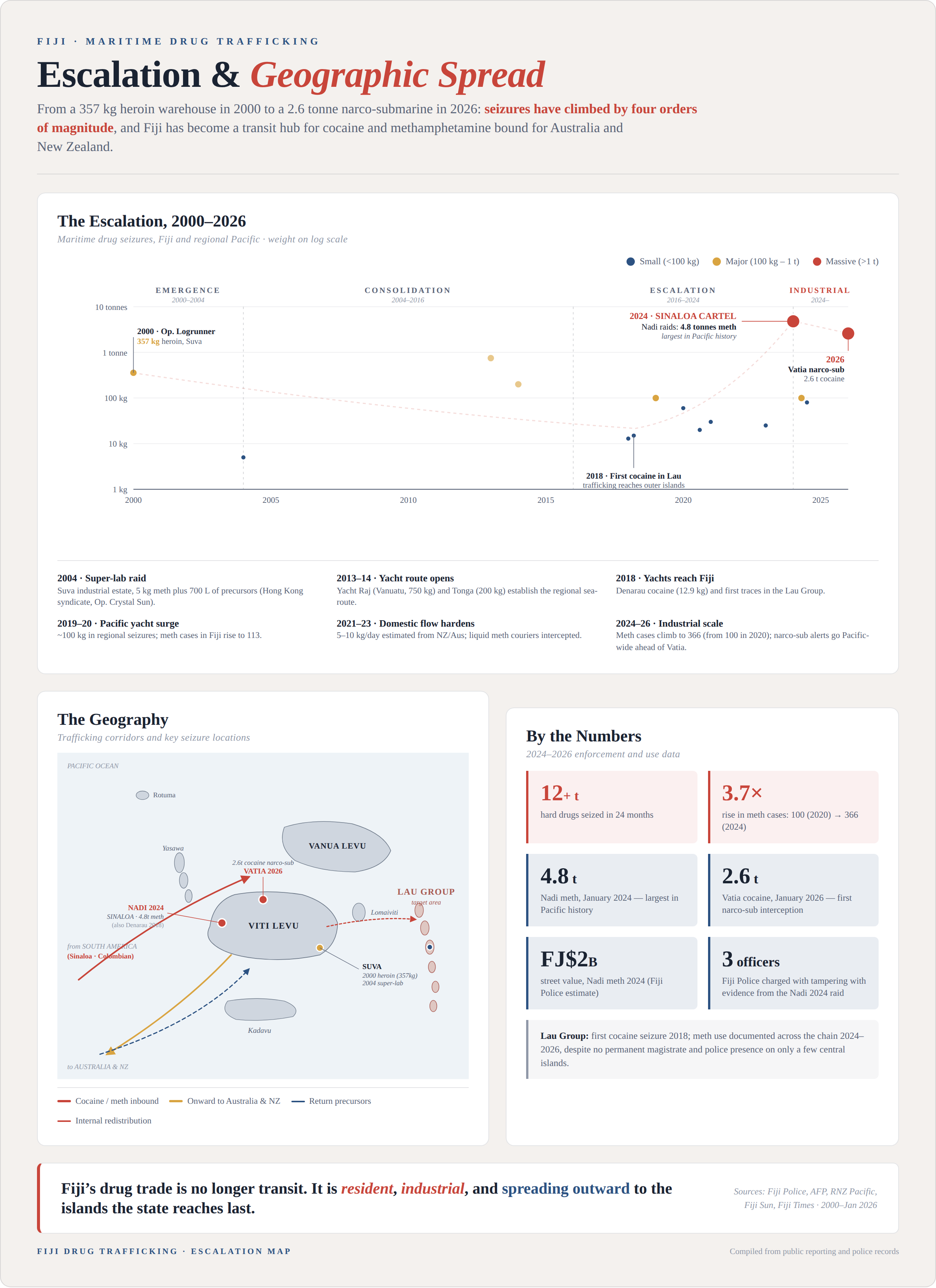
The Lau Group occupies a strategic position at the intersection of three trafficking corridors: a southern route originating in South America, a western pathway through Vanuatu and the Solomon Islands, and a domestic redistribution network centred on Suva. Despite generating none of the underlying drivers of this crisis, the province bears a disproportionate burden, absorbing costs estimated at up to 60 times the national per capita impact. Communities that have repeatedly requested sustained patrols and received none are the same communities whose young men later appear in Suva’s courts, displaced from kinship networks and incarcerated on Viti Levu, often beyond the financial reach of family visitation. In this dynamic, the state is largely absent in prevention yet highly visible in punishment.
The return-on-investment metrics tell the rest. Community cohesion scores 90/100, the highest return (Fig.1). In the Pacific, social capital is the infrastructure; the village, with strong kinship networks, functioning churches, active women’s groups, and respected elders, has an institutional capacity that no state programme can replicate. Traffickers target this cohesion precisely because it resists them. Trust networks that distribute kava can distribute methamphetamine. Reciprocal labour relationships can become debt bondage, and youth unemployment becomes recruitment.
Police integrity scores 60/100, the lowest return, and the gateway. Without it, every other dollar is compromised, intelligence leaks and patrol schedules become predictable. Officers enforce against local users while protecting the distribution networks that supply them. A compromised Coast Guard Auxiliary is worse than none. It provides the illusion of enforcement while actively facilitating trafficking.
Tourism contributes an estimated 40% to Fiji’s GDP when both direct and indirect economic effects are taken into account, according to industry and government estimates. One overdose in the Mamanucas, one violent incident at a Yasawa resort, one corruption scandal at immigration, and international headlines depress bookings for months. The trafficker who lands a shipment in Kadavu or Rotuma generates no tourism revenue there. But the reputational damage hits the entire Fiji brand. Maritime communities pay the costs of the crisis directly (health, social damage, lost productivity) and indirectly through foregone economic opportunities. That is a double tax on people who didn’t create the problem.
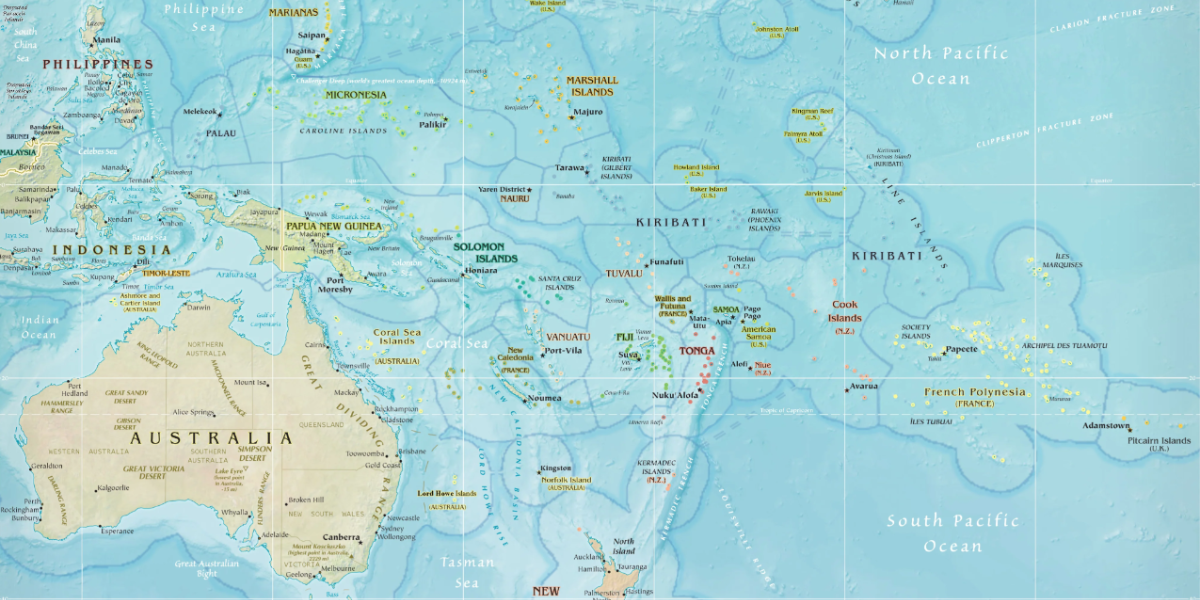
Figure 2 maps the same crisis. The Pacific drug trade is a regional system, and Fiji is a node because it offers both isolation and connectivity (via Suva and Nadi) to the Australian and New Zealand markets. Unilateral enforcement just displaces trafficking to Vanuatu or Tonga. The Biketawa Declaration provides a framework for regional security cooperation, but implementation has lagged ambition. Australia and New Zealand provide surveillance assistance, the United States has increased engagement, and China has built port infrastructure. These partnerships are valuable but insufficient; they can’t substitute for domestic prevention. They can’t fix a fiscal architecture that hides crisis costs in distributed budget lines. And they can’t correct a per-capita imbalance that charges Lau FJD $288 for a crisis generated in transnational supply chains.
So what would prevention look like? Reframe the crisis as peripheralisation rather than criminality. Correct the per-capita imbalance: if maritime communities bear 60 times the cost, they deserve 60 times the investment, not charity but restitution. For the Lau Group, that means a permanent magistrate, addiction treatment that doesn’t require medical evacuation to Suva, a Coast Guard station with vessels and fuel for 16,000 square kilometres of water, and jobs for youths who might otherwise crew trafficking boats. Legislate the FJD $710 million net savings as a binding commitment with annual reporting. Regionalise enforcement through intelligence-sharing with Vanuatu, the Solomon Islands, Tonga, and Samoa. And fix police integrity (competitive salaries, independent oversight, rotation protocols), because without it, nothing else works.
Maritime Fiji should not have to keep paying the price for drug operations that thrive in the gaps left by weak governance.