Across the Kala Pani, Against the Silence
Fiji's 147th Girmit commemoration smoothed indenture into a palatable migration story. The antidote lies in the work of Professor Brij Lal, a historian who insisted on truth before comfort, and paid for it with exile.

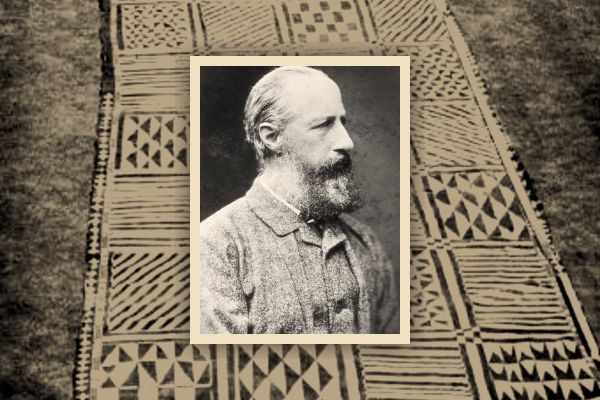
Why Professor Brij Vilash Lal AM Still Speaks for the Girmitiyas
Fiji marked the 147th anniversary of Indian indenture on 15 May with scaled-back ceremonies and an official theme, 'From Roots to Wings,' that smoothed the rough edges of a brutal system into a palatable migration narrative. The antidote to that comfort lies in the work of a historian who insisted on truth before commemoration.
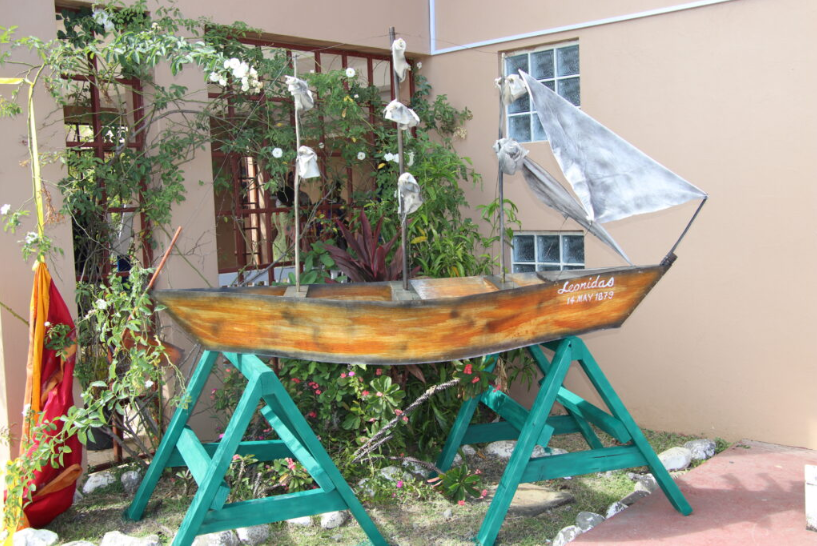
The Leonidas dropped anchor at Levuka on 14 May 1879. Among its cargo: 498 Indians who had signed an 'agreement' they pronounced girmit, a word that would come to define not merely a labour contract but an entire people's origin story. Over the next four decades, 60,553 would follow, 60,965 had left India, but not all survived crossing the kala pani to cut cane in a colony that needed their sweat but struggled to grant them dignity.
One hundred and forty-seven years later, Fiji observed Girmit Day 2026, a national public holiday since 2023, with online ceremonies and a modest gathering at the Fiji Museum. The theme, 'From Roots to Wings: Carrying the Girmit Flame Forward,' captured the celebratory mood officials prefer. What it risked obscuring was the system's violence: the sexual exploitation documented in plantation records, the suicides that punctuated daily life, the caste and religious fractures that recruitment both exploited and dissolved.
This is precisely where Brij V. Lal's scholarship becomes indispensable and urgently relevant.
Lal, who died in 2021, was not merely an historian of indenture. He was its inheritor. His grandfather, Kallu, arrived in 1908, among the last ships before the system ended. Raised in Tabia, a settlement built on Girmitiya labour, Lal carried that legacy to the Australian National University, where he became the foremost authority on the Girmit experience. His 1983 monograph Girmitiyas analysed over 45,000 emigration passes to reconstruct who these migrants actually were: their villages, castes, ages, and the 'push' factors that drove them to sign contracts they could not read.
The result demolished two convenient myths. Colonial officials had portrayed indenture as a benevolent system of 'free' labour migration; Indian nationalists condemned it as a 'new system of slavery.' Lal showed it was neither. The Girmitiyas were not helpless victims, nor grateful beneficiaries of the empire. They were agents making constrained choices in circumstances of profound desperation, and their descendants built modern Fiji's multicultural society from that fractured foundation.
Lal's later work grew more personal and more fearless. Chalo Jahaji (2000) wove family memory with archival rigour to trace the full journey from recruitment depot to plantation barracks. His articles 'Veil of Dishonour' and 'Kunti's Cry' — both published in 1985, confronted sexual violence and women's suffering head-on: subjects previous historians had treated with polite silence. These were not comfortable histories. They were necessary ones.
That commitment to unvarnished truth carried a personal cost. Lal was an outspoken critic of Fiji's coups in 1987, 2000, and 2006, and a defender of constitutional democracy. The military regime declared him persona non grata in 2009, exiling him from the country whose history he had done most to illuminate. He died in Canberra, his ashes eventually scattered near the Lautoka cane fields where his grandfather had laboured.
Brij Lal understood that the kala pani was never merely a geographical crossing. It was a rupture of caste, of language, of belonging, that the girmitiyas navigated without maps. Official commemoration last week risks smoothing that rupture into a story of seamless progress, of roots becoming wings without turbulence. Lal's work insists on the turbulence. He spent his life ensuring that the silence around indenture, the plantation suicides, the sexual violence, and the daily indignities of a system built on coercion found voice in the historical record. Fiji's Girmit Day commemorations have grown in stature since becoming a public holiday, and that visibility matters. But commemoration without critical history risks becoming performance. As Fiji carries the Girmit flame forward, the question is not whether the past will be remembered, but whether it will be remembered as it was. The kala pani still separates official comfort from historical truth. Lal built the bridge. The crossing remains ours to make.
READ BRIJ LAL — FREE DOWNLOADS
All titles below are freely available from ANU Press.
Girmitiyas: The Origins of the Fiji Indians (1983) — the foundational work. Originally published by the Journal of Pacific History; reprinted 2004. Not freely available online — held in university libraries and via Project MUSE.
Chalo Jahaji: On a Journey Through Indenture in Fiji (2000) — collected essays on the girmit experience. Free PDF from ANU Press.
Levelling Wind (2019) — his final collection. Free PDF from ANU Press.
Browse all 18 of Brij Lal's ANU Press titles — all freely available