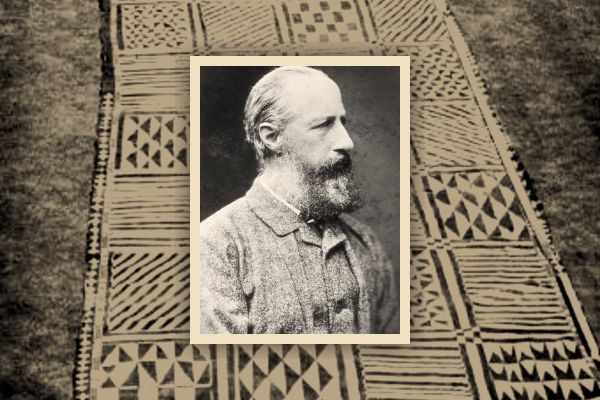
From the Hospital at Lyon: Ratu Sir Lala Sukuna
In 1914, the British Army refused him. So he crossed the Channel and joined the French Foreign Legion instead.

FPR Portrait returns to the primary sources, the letters, the records, the documents, to look at the figures Fiji's history made.
Hôpital Complémentaire No. 17 — Lyon, France
Written by J.L.V. Sukuna to William Farnsworth, father of Henry Weston Farnsworth
American volunteer, French Foreign Legion, killed in action 28 September 1915.
Published in Letters of Henry Weston Farnsworth, of the Foreign Legion (1916).
In October 1915, a Fijian chief lay wounded in a military hospital in Lyon, France. He had been fighting with the French Foreign Legion, refused by the British Army on racial grounds the year before. The man who had saved his life was dead. His friend’s father was waiting for news. This is the letter he wrote.
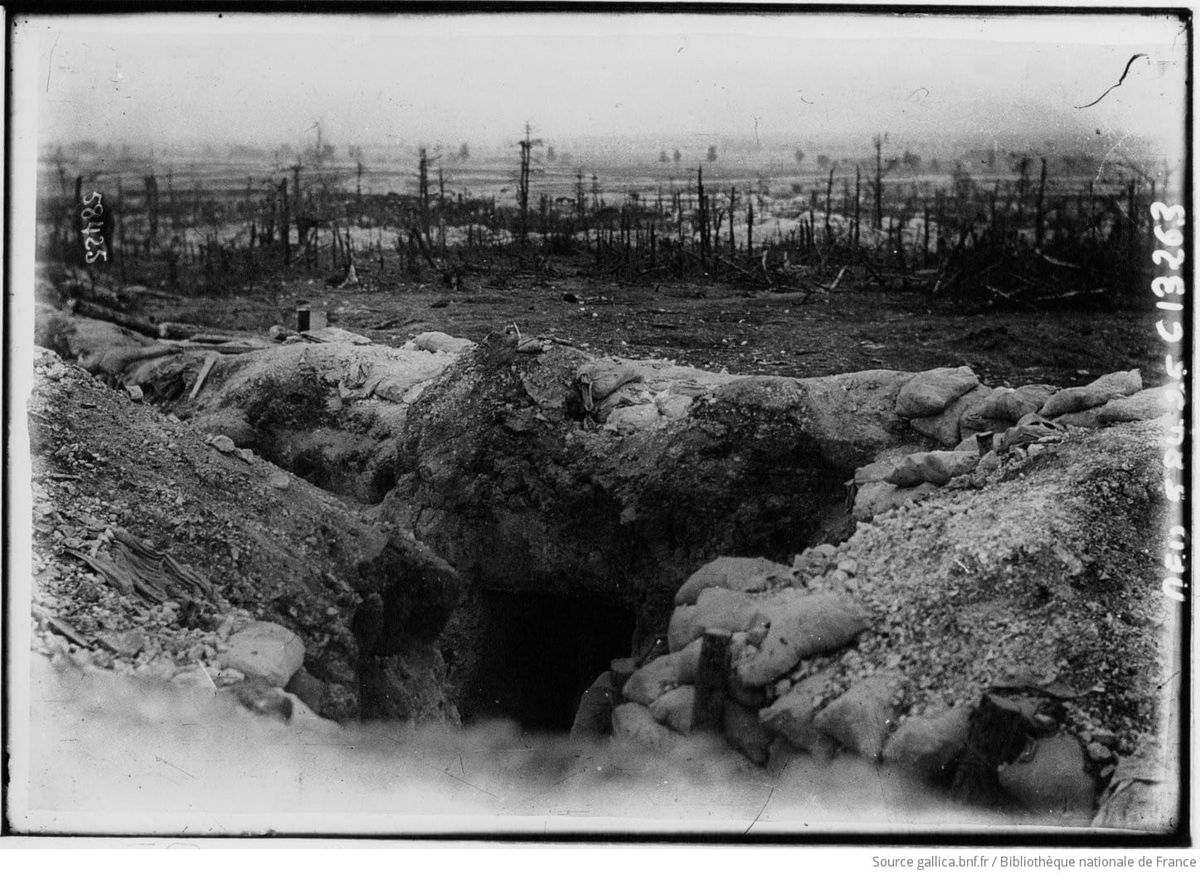
At the request of your son, I am to say with real pain that he was severely wounded on the afternoon of the 28th of September last, on the 4th day of the battle of Champagne, a little in front of the German wire entanglements of the second line before the Fortin de Navarin.
A large number of machine guns were on the right flank, and in front, where they were concentrating their fire on the leading files of the attacking party, and no stretcher-bearer could possibly reach the spot where he was lying. Toward dusk the column was still being held up. I left for the rear about this time, but all I could do, I regret to say, was to ask medical people to go up if possible.
As one who has seen a great deal of him here, I would venture to mention how much his coolness under fire has on occasions helped to steady the section, and how his indifference to danger prompted him at all times to volunteer for the most dangerous posts.
Under a withering rifle and machine gun fire, he denied my first word and dug a hole for me, to which act I probably owe my life.
Up to the present, no fresh information of him has come my way, but I shall always be glad to furnish any previous news.
May I here express my profound and sincere sympathies.

Source & Context — This letter is, as far as the published record shows, the earliest known piece of extended writing by Ratu Sir Josefa Lalabalavu Sukuna in his own voice. He was twenty-seven years old, writing from a hospital bed in Lyon with a head wound sustained four days earlier at Souain. Henry Farnsworth, a Harvard graduate from Dedham, Massachusetts, died of his wounds. Sukuna survived. He returned to Fiji in bandages in March 1916, then came back to France with the Native Transport Detachment. He wore his Médaille Militaire — the 3rd Republic variant, bearing the date 1870 — for the rest of his life. Medal photograph: Wikimedia Commons.
"I wonder if we at home are too parochial to stand for him" - Henry Weston Farnsworth, in a letter to his family, 1915
In 1914, Ratu Sukuna was at Wadham College, Oxford, one year into a history degree the Colonial Secretary had granted reluctantly. When war broke out, he applied to enlist in the British Army. The British government refused, citing something about not exploiting native peoples. So he crossed the Channel and joined the French Foreign Legion instead, fighting with the Moroccan Division on the Western Front through the killing fields of Champagne. In the trenches, he shared a cabin with Henry Weston Farnsworth, a Harvard graduate from Massachusetts who was killed in the September 1915 assault that left Sukuna wounded in the temple. Four days later, from a hospital in Lyon, Sukuna wrote to Farnsworth’s father an account of where his son fell: “Under a withering rifle and machine gun fire, he denied my first word and dug a hole for me, to which act I probably owe my life.” It is, as far as the published record shows, among the earliest extended writing by Sukuna in his own voice. He was twenty-seven, and the prose was already what it would remain: measured, exact, careful about facts before claims.
He returned to Fiji in bandages in 1916, came back to France with the Native Transport Detachment, and served again, this time as a sergeant; all officers remained British. He had earned decorations under French command that the British Army had not permitted him to earn on its own terms, and he wore his Médaille Militaire for the rest of his life. After the war, he completed his Oxford degree and qualified for the bar at the Middle Temple, refusing the colonial governor’s suggestion that Australian qualifications would suffice. He understood, precisely, what the credential was for. The decade he spent in Britain and France remains the most underdocumented period of his life; Deryck Scarr’s authorised biography contains almost no discussion of it. But the Farnsworth letters show a man moving through Europe on his own terms, asked by a Harvard man whether his own family back home were too parochial to receive a Fijian chief.
What is recorded is what he said when he came home. In 1917, he argued for the suppression of the Viti Kabani movement and the indispensability of chiefly authority to colonial order; Apolosi Nawai was exiled. In 1933, he told the Legislative Council that Fijians would look to European leadership for generations to come. In 1936, he persuaded the Great Council of Chiefs to surrender direct control of their land to a central board he had designed, which became the Native Land Trust Board. In 1940, his brother, a newly qualified doctor, was refused appointment to the government medical service on racial grounds. The record does not tell us what Ratu Sukuna said in private about that. It tells us he kept building. The institutions that now sit at the centre of Fiji’s constitutional moment were built by a man who knew exactly what exclusion felt like, and built anyway.