Ceremony as Constitution: The Tui Nayau and the Limits of Written Sovereignty
The Tui Nayau's authority is not delegated by the Fijian state. It predates the Fijian state. It has continued through every constitutional order the Fijian state has produced.

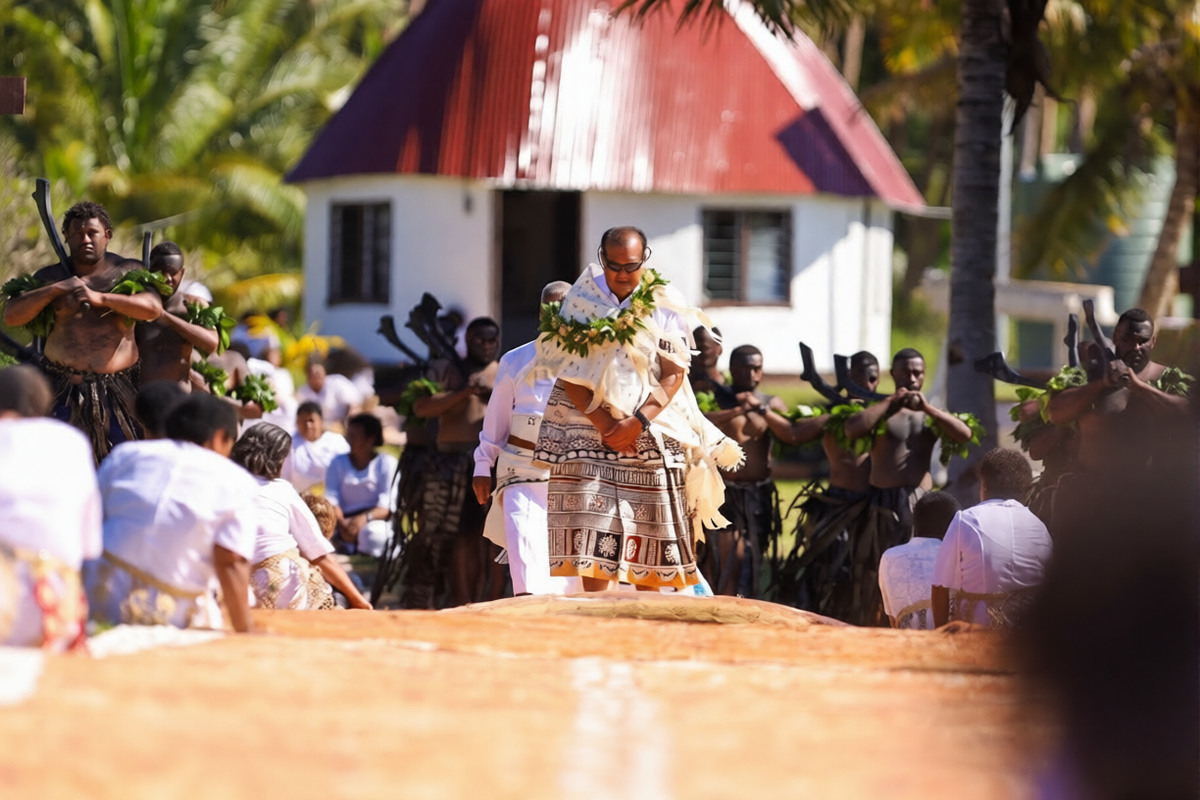
The installation of a Tui Nayau in Lau is not a ceremony that happens outside Fiji's constitutional order. It is a source of that order, one the 2013 Constitution neither replaces nor recognises.
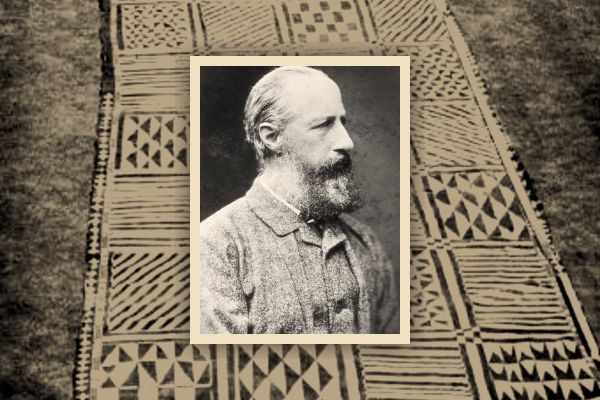
That claim is not metaphorical. Marshall Sahlins's 1981 paper The Stranger-King, or Dumézil among the Fijians established that Fijian chieftainship operates through a specific constitutional logic. The chief comes from outside — a stranger and is installed by the people of the land through a ceremonial process that transfers authority. The chief does not take sovereignty. Sovereignty is given by those who hold it customarily. The installation is the mechanism through which political authority becomes legitimate.
This is a constitutional process in the proper sense. It has a source, a procedure, and an outcome. It confers authority that binds a defined political community. It has been operating continuously in the Lau Group for centuries, through colonial administration, through independence, through four coups, through the abolition of the Great Council of Chiefs by decree in 2012, and through the drafting of the 2013 Constitution.
The 2013 Constitution does not mention it. This piece examines that silence.
What the written constitution says about chieftainship
The 2013 Constitution of Fiji contains no operative provisions on chiefly authority. Section 27 recognises iTaukei land ownership. Section 28 protects that ownership from permanent alienation. Section 30 guarantees landowners a share of mineral royalties. These are important protections. They deal with property. They do not deal with authority.
The Great Council of Chiefs, the Bose Levu Vakaturaga, appears nowhere in the 2013 Constitution's operative text. The body was abolished by decree of the Bainimarama military government in 2012, and the 2013 Constitution contained no place for it. It was restored under ordinary legislation by the Rabuka coalition government in 2023 and now operates under the iTaukei Affairs (Great Council of Chiefs) Regulations 2024. That legislation gives it consultative status. It does not entrench it constitutionally.
The result is a written constitutional framework that recognises iTaukei people as citizens, protects their land, and is silent on the institutions through which they have exercised political authority for as long as those institutions have existed.
What the installation of a Tui actually does
An installation ceremony in Lau, as in Fijian chiefly systems generally, proceeds through specific stages. The candidate is brought to the ceremonial ground. Yaqona is prepared and presented. The mataqali who hold the customary right to install the chief perform the ritual acts that transfer authority. The presentation of tabua and specific ceremonial exchanges mark the completion of the installation. The person who was previously a candidate is now the "Tui".
That transfer is not symbolic. The "Tui" gains the authority to speak for the vanua in matters of governance, resource allocation, dispute resolution, and external relations. The mataqali who performed the installation retain the customary right to withdraw recognition — the installation can, in principle, be reversed by the same process that conferred it. This is a constitutional relationship in Sahlins's sense: authority derives from a specific procedural source and is bounded by that source.
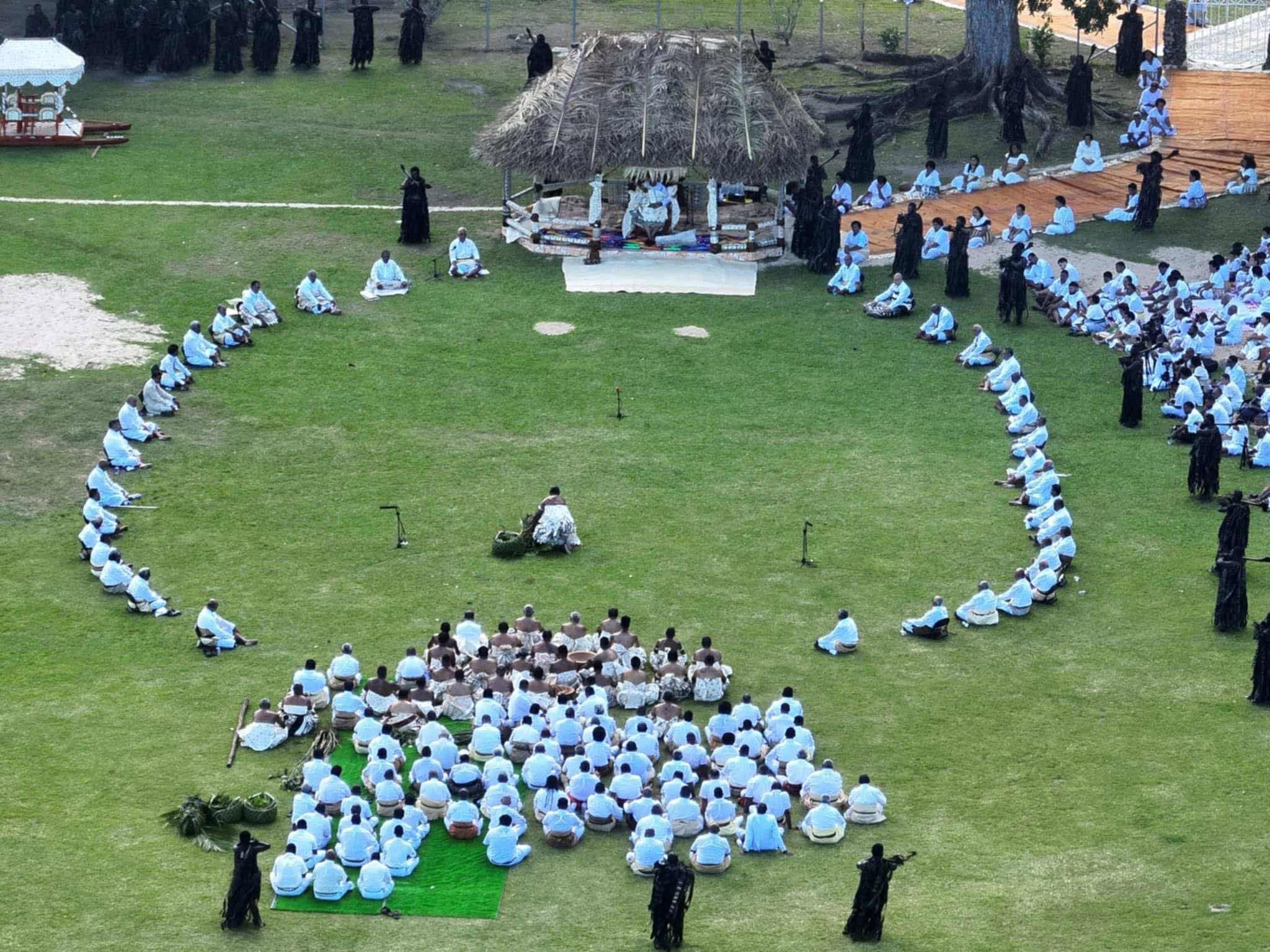
The Tui Nayau's authority is not delegated by the Fijian state. It predates the Fijian state. It has continued through every constitutional order the Fijian state has produced. The written constitutions of 1970, 1990, 1997, and 2013 have varied enormously in their treatment of chiefly authority. The installation ceremony has continued regardless.
Why this matters constitutionally
Comparative constitutional scholarship has for some time recognised that constitutional orders can operate in parallel. New Zealand's Treaty of Waitangi jurisprudence has spent decades working through the relationship between Crown sovereignty and iwi authority as parallel constitutional sources. Australian native title law, since Mabo, has grappled with the coexistence of common law and Indigenous law. Canada's constitutional recognition of Indigenous rights under section 35 of the Constitution Act 1982 explicitly accommodates plural constitutional orders.
Fiji has not undertaken this work at the constitutional level. The 2013 Constitution reflects the political preferences of its drafters, the Bainimarama government's civic-nationalist framework, which sought to submerge iTaukei institutional specificity beneath a common Fijian citizenship. The Great Council of Chiefs was abolished within that logic. The chiefly systems that continued to operate in Lau, Cakaudrove, Bua, and elsewhere were not addressed. They were left to continue outside the written framework.
The consequence is a constitutional silence that is not accidental. It is a design choice. The 2013 Constitution is not silent because chiefly authority does not exist. It is silent because that framework chose not to see it.
The Constitutional Review Commission and the question of recognition
The Constitutional Review Commission has delivered its report to the President on 31 August 2026. Its terms of reference include the recognition and status of iTaukei institutions. The Great Council of Chiefs has submitted proposals on presidential appointment, the naming of citizens, and its own constitutional entrenchment. Individual chiefs, provincial councils, and iTaukei civil society organisations have made submissions of varying scope on chiefly authority.
The CRC will have to decide whether its recommendations propose constitutional recognition of chiefly institutions and, if so, in what form. That decision has significant implications for the Republic's constitutional structure. Constitutional recognition of chiefly authority would end the silence the 2013 Constitution maintains. Non-recognition would confirm that silence as the settled position of the Fijian state.
Either decision is a decision. There is no neutral option.
The limits of written sovereignty
The argument this piece makes is not that the 2013 Constitution is illegitimate because it does not recognise chiefly authority. It is that the 2013 Constitution cannot fully describe the Fijian constitutional order because chiefly authority operates through sources the written constitution has never captured. The installation of a Tui Nayau is one such source. The oral traditions that preserve chiefly genealogies are another. The customary law of iqoliqoli allocation is another. The vanua's internal decision-making processes are another.
None of these can be reduced to the categories the written constitution recognises. They are governance institutions in their own right. They exist. They function. They shape political outcomes in ways the written constitution does not track.
A publication of political analysis that ignores them tells only part of the story. FPR's Vanua section exists because the other part is worth telling.
Lanieta Tukana is the founding editor of the Fiji Political Review. Her advisory relationship with Tokatoka Delaiwawa and Mataqali Butonivanua in Nayau grounds the empirical claims about the installation ceremony in this piece. The theoretical framework draws on Marshall Sahlins, "The Stranger-King, or Dumézil among the Fijians," Journal of Pacific History 16, no. 3 (1981): 107-132.
Read more analysis in FPR's Vanua section: fijipoliticalreview.com/vanua
References
Legislation and constitutional instruments
Constitution of the Republic of Fiji 2013. iTaukei Affairs (Great Council of Chiefs) Regulations 2024 (Fiji). Constitutional Review Commission Terms of Reference 2025.
Academic sources
Sahlins, Marshall. "The Stranger-King, or Dumézil among the Fijians." Journal of Pacific History 16, no. 3 (1981).
Comparative constitutional context
Mabo v Queensland (No 2) (1992) 175 CLR 1. Constitution Act 1982, s 35 (Canada). Treaty of Waitangi 1840; Waitangi Tribunal jurisprudence, New Zealand.
Primary source grounding
Author's advisory relationship with Tokatoka Delaiwawa and Mataqali Butonivanua, Nayau, Lau.