The Vuvale Union's labour history problem
Australia's 32nd Recognition Day arrives seven weeks after the Vuvale Union treaty was signed in Suva. Both share a labour history neither Canberra nor Suva has fully reckoned with.

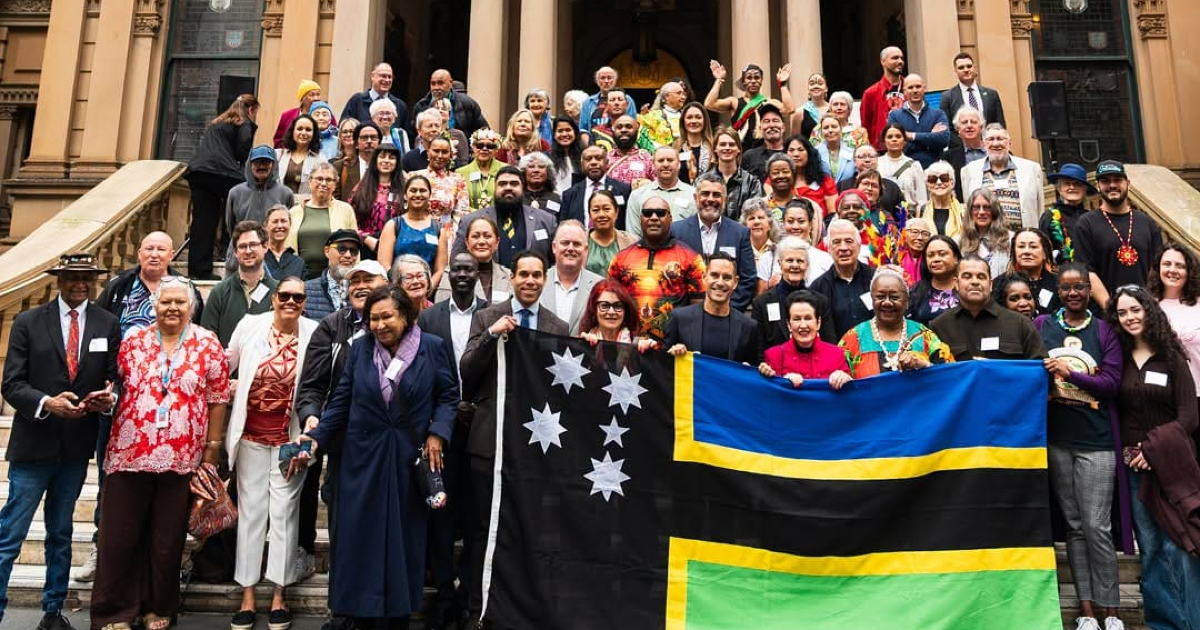
Australian South Sea Islander National Recognition Day, marked today for the 32nd time since the Keating government's 1994 acknowledgement, arrives seven weeks after Australia and Fiji signed the Vuvale Union treaty in Suva on 6 July 2026. That treaty, and the accompanying Ocean of Peace Alliance signed the same day, elevates the bilateral relationship to a comprehensive strategic partnership with labour mobility as a foundational pillar, per the DFAT-published treaty text.
The commemoration and the treaty share more history than either government has cared to acknowledge.
A cotton economy built on Melanesian labour
The Pacific labour trade to Fiji began in 1864, driven by the collapse of American cotton supply during the Civil War and the resulting global price spike. Sarah Searight's 1972 account for History Today dates Fiji's first labour recruitment to that year, and Shoshi Parks's 2024 reporting for Smithsonian Magazine places the first ships carrying ni-Vanuatu workers in Fiji in 1864 and 1865, roughly a year after the Don Juan arrived in Brisbane with the first Queensland shipment of Melanesian labour.
Settlers from Australia, the United States and Britain established plantations across Vitilevu, Vanualevu, Taveuni and the Lau Group, according to Jeff Siegel's sociolinguistic history of the period. Labourers were recruited, and in many cases coerced or kidnapped, from what are now Vanuatu and the Solomon Islands.
The scale is well-documented in the academic record. Siegel's 1985 study in the Journal of Pacific History recorded 27,027 contracts of indentured Melanesian labour in Fiji between 1864 and 1911. Peter Corris's foundational 1973 monograph Passage, Port and Plantation documented 8,228 Solomon Islander recruitments specifically to Fijian cotton and sugar between 1870 and 1914. Across the wider trade, Parks cites Gerald Horne's estimates putting the total number of Pacific Islanders trafficked into Fiji and Australia combined between 61,610 and more than 100,000.
The community that stayed
The descendants of those who remained in Fiji became known as the Solomoni, or in fuller Fijian, the Kai Solomoni. The label captures Solomon Islands origin but understates the ni-Vanuatu presence. Winston Halapua, the former Anglican Archbishop who conducted the fullest ethnographic study of the community, documented in Living on the Fringe: Melanesians of Fiji (2001) how displacement from the plantations into Suva and Levuka positioned them as a marginalised urban population whose welfare successive Fijian governments consistently declined to take on, leaving the Anglican Church as the primary institutional support.
The Commonwealth of Australia's 1994 statement, followed by Queensland's 2000 recognition and successive NSW motions from 1995 onward, formally identified Australian South Sea Islanders as a distinct cultural group with a specific historical claim on the state. The Port Jackson organisation, chaired by Waskam Emelda Davis, has since built recognition into an annual civic architecture that includes flag-raisings at Sydney Town Hall, Inner West Council, and the Australian National Maritime Museum.
No equivalent statement has been made by any Fijian government. A public-record search for a formal recognition from the Ministry of iTaukei Affairs or the Ministry of Multi-Ethnic Affairs returns nothing. Hilary Summy's 2009 essay in Social Alternatives framed the community as "Fiji's forgotten people" in institutional terms, and no subsequent legislative or executive instrument has altered that framing.
The Vuvale Union's institutional weight
The July 2026 Vuvale Union treaty sets out a comprehensive framework covering economic integration, defence, climate, and workforce mobility. Prime Minister Rabuka has called it "the direction and tone of Fiji and Australia's relations for centuries to come." The Vuvale Skills Hub and expanded Pacific Australia Labour Mobility (PALM) visa access sit at the operational core of the labour pillar. Australia's development assistance to the region now totals AUD 2.2 billion, with more than AUD 1.5 billion in new Australian investment flowing to Fiji since the elevated Vuvale Partnership was signed in October 2023.
The scale of the arrangement makes the historical omission strategically consequential. Labour mobility architecture in the region is a fraught category. It carries the residue of the 19th-century indentured labour trade, the White Australia Policy deportations from 1901 to 1908, and the more recent debates over PALM worker conditions, wage theft, and return arrangements.
Australia has processed some of that residue publicly. The 1994 Commonwealth recognition, imperfect and long-delayed, is on the record. Fiji has not made an equivalent gesture, either domestically toward the Solomoni or diplomatically toward the Solomon Islands and Vanuatu governments whose citizens' ancestors built Fiji's first plantation economy.
Implications for Canberra
The analytical value of Recognition Day for Canberra is institutional. It is a reminder that Australia's Pacific labour policy carries a longer institutional memory than the PALM scheme's post-2007 development suggests, and that regional partners read that memory closely. When Foreign Minister Wong and Pacific Islands Affairs Minister Conroy concluded the Vuvale Union negotiations during their May 2026 Suva visit, which CSIS characterised as the treaty's finalisation ahead of the July signing, the labour mobility text sat inside a bilateral relationship whose historical labour flows have never been fully documented from the Fijian side.
The gap has strategic consequences. If Canberra's Pacific labour architecture is to serve as a pillar of the broader Ocean of Peace regional framework, its historical grounding cannot rest solely on Australian recognition instruments. A partner state that has not reckoned publicly with its own labour trade history is a partner state whose domestic constituencies retain the capacity to reopen the conversation at moments of Canberra's choosing, or of Beijing's.
Implications for Suva
For Suva, the day sits closer to a mirror. Fiji sent workers to Queensland's cane fields under the same coercive machinery that brought Melanesian labourers to Fijian plantations. It received them, and the descendants of those brought under duress remain in Fiji today without state recognition.
Both facts should inform Fiji's negotiating posture on labour mobility under the Vuvale framework, its diplomatic advocacy on regional labour standards through the Pacific Islands Forum, and its bilateral engagement with the Solomon Islands and Vanuatu governments.
A Fijian recognition statement, along the lines of the 1994 Australian model, would be a modest and overdue instrument. It would carry weight beyond its symbolism. It would signal that the labour architecture Fiji is now helping to build with Australia rests on a full accounting of what the earlier version cost. The 32nd anniversary of Australia's recognition is a reasonable occasion for Suva to consider its own.
Sources:
- Australian Museum, "Australian South Sea Islander Recognition Day"
- Australian South Sea Islanders – Port Jackson, "Who We Are"
- Center for Strategic and International Studies, "What Australia and Fiji's New Treaty Means for the Pacific" (June 2026)
- Corris, Passage, Port and Plantation (Melbourne University Press, 1973)
- DFAT, "Fiji-Australia Vuvale Union" treaty text (July 2026)
- Fijivillage, "Fiji secures $1.5b in Australian investment as Vuvale Treaty Union signed" (July 2026)
- Halapua, Living on the Fringe: Melanesians of Fiji (USP, 2001)
- Ministry of Foreign Affairs (Fiji), Vuvale Union media statement (July 2026)
- Office of the Prime Minister (Fiji), "Negotiations on the Fiji-Australia Security Treaty: The Vuvale Union"
- Parks, "How 'Blackbirders' Forced Tens of Thousands of Pacific Islanders Into Slavery," Smithsonian Magazine (December 2024)
- Searight, "The British Acquisition of Fiji," History Today (November 1972)
- Siegel, "Origins of Pacific Island Labourers in Fiji," Journal of Pacific History 20:2 (1985)
- Siegel, "Pidgin English in Fiji," Pacific Studies 9:3 (1986)
- State Library of Queensland, "Australian South Sea Islanders National Recognition Day"
- Summy, "Fiji's Forgotten People: The Legatees of 'Blackbirding'," Social Alternatives 28:4 (2009)
- Wyeth, "From Partnership to Union: Australia and Fiji Sign 2 New Security Agreements," The Diplomat (July 2026)