"Hello, This Is the Prime Minister": Reflections on Democratic Stability
Timor-Leste's President told a Sydney audience that Australia changes leaders without coups. Fiji, months from its truth commission's final report, should note what Dili learned: a report is only as strong as the institution built to carry it out.

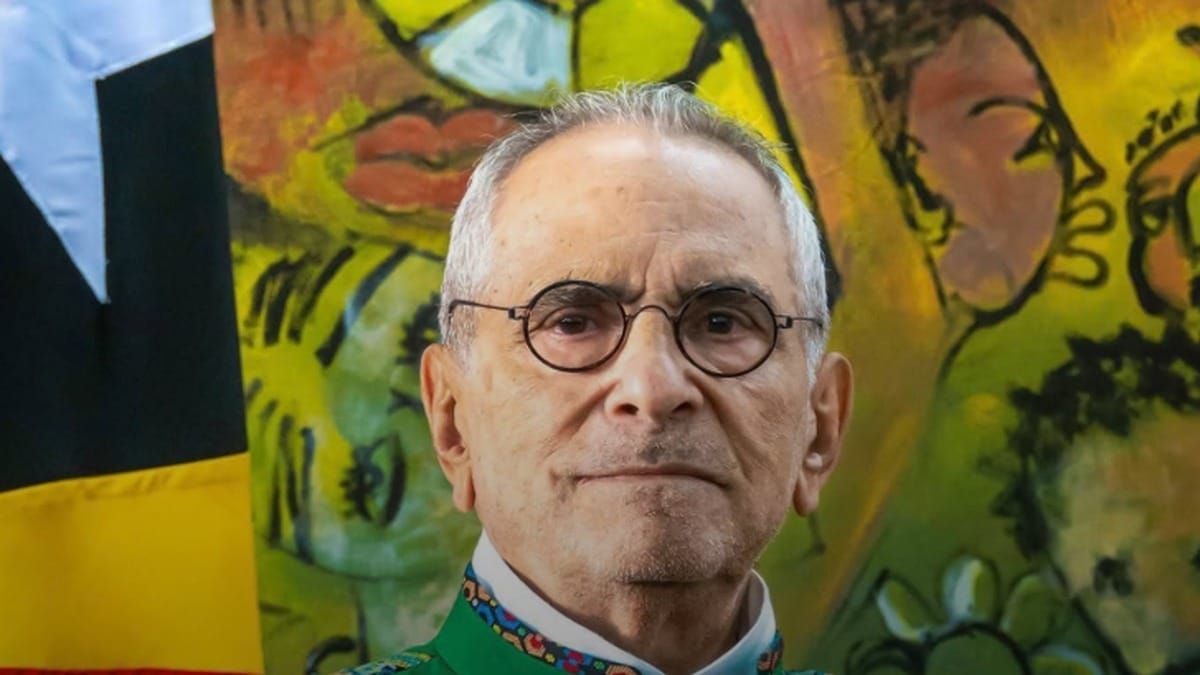
Timor-Leste's President shared a parable on democratic stability with a Sydney audience. As Fiji approaches its truth commission's final report, the underlying message is especially relevant.
To illustrate Australian democracy's stability, José Ramos-Horta reached for an anecdote. Speaking at the University of Sydney on 16 October in a public lecture hosted by the Sydney Southeast Asia Centre, Timor-Leste's President recalled visiting Australia in June 2010. Kevin Rudd, then Prime Minister, hosted him at dinner. By the time he returned to Sydney from Lismore, the Prime Minister on the phone was Julia Gillard.
The leadership change is well documented. Rudd was removed by his own party during his first term on 24 June 2010, and Gillard was sworn in as Australia's 27th Prime Minister that same day. The ABC described it as a "bloodless coup". Ramos-Horta's point was that Australia can change leaders abruptly, yet peacefully and without military involvement.
He made a similar point about the media. In 2023, he noted, Timor-Leste ranked 10th in the RSF World Press Freedom Index, ahead of the United Kingdom, Australia and the United States. The index bears him out: that year the UK was 26th, Australia 27th and the US 45th. Timor-Leste has since slipped to 30th in 2026. Fiji now ranks above it, at 24th, after climbing from 89th in 2023.
He did not mention Fiji directly, but the implication was clear. Fiji established a truth and reconciliation commission in response to the coups that began in 1987, with its final report due in February 2027. Timor-Leste's experience suggests that the most significant decisions will follow the report's release.
A Timorese thread
Ramos-Horta was in Fiji earlier this month, where he and the Prime Minister of Mauritius, Navin Ramgoolam, appeared to be the only non-Pacific leaders at the opening of Pre-COP31 in Nadi on 5 October. He told the Sydney audience he met Gillard there. Now chair of Wellcome, the former Australian Prime Minister was on the Pre-COP31 programme and spoke on heat and maternal health.
At the Leaders Plenary in Denarau, Ramos-Horta described climate change as a matter of justice, noting that the countries contributing least to the crisis face some of its most severe impacts. Read from Suva, the argument has a familiar shape. Fiji’s coups were carried out by a few, and the survivors now giving testimony to the Commission are among the many who bore the cost.
The Fiji Truth and Reconciliation Commission, established under the Fiji Truth and Reconciliation Commission Act 2024, examines the upheavals of 1987, 2000 and 2006 and gives survivors a chance to tell their stories. Prime Minister Sitiveni Rabuka, who led the 1987 coup, appeared before it in November 2025. He accepted responsibility for opening the door to the human rights violations that followed, while stating he had no control over those who committed them.
The Commission's chair links the two processes directly. Joaquim da Fonseca, sworn in on 29 January 2026, has worked on Timor-Leste's truth and reconciliation efforts since 1999. That includes early initiatives under the UN Transitional Administration in East Timor, which established CAVR, and later the National Commission for Reconciliation among Timorese.
Da Fonseca has been careful to say Fiji can't directly replicate the Timorese model. Two features of that model are nonetheless directly relevant: one that worked, and one that failed.
What worked, and what didn't
CAVR's mandate addressed violations by all parties from April 1974 to October 1999. Its most lasting effect was at the local level. The International Center for Transitional Justice credits its community reconciliation program with fostering grassroots peace after the violence of 1999. The program dealt with individuals responsible for less serious offences, within their own communities.
The shortcomings emerged later. CAVR delivered its final report, Chega!, in 2005, spanning about 2,500 pages with 204 recommendations. A decade later, ICTJ found that only a handful had been formally acted on.
Some obstacles were political. Many key recommendations addressed violations by Indonesia, and Xanana Gusmão, then President, distanced Timor-Leste from them in 2005. Others were institutional. Centro Nacional Chega! was created by decree in 2016 and operational by July 2017. For 11 years (2016 − 2005), no body existed to carry the report's recommendations forward.
Fiji's Commission faces both tests. The first is reach, and there it is spread thin, with five commissioners and fewer than 30 staff. In March 2026, Commissioner Sekove Naqiolevu said it had not yet reached the Northern Division or the maritime islands. The Commission has since scheduled diaspora hearings in Brisbane, Sydney, Melbourne and Canberra. FPR cannot confirm how far the domestic gap has closed.
Patience, and its limits
Ramos-Horta knows the cost of waiting. He has long joked that entering heaven is easier than entering ASEAN, a line he used in Jakarta in July 2022 while the bloc kept Timor-Leste out. In Sydney, he repeated it as the leader of a member state. Timor-Leste applied in 2011 and became ASEAN's 11th member on 26 October 2025, 14 years later (2025 − 2011). The argument beneath the joke, made at the ISEAS Singapore Lecture, was that perfection belongs in heaven, and a state should be able to join with its imperfections.
Da Fonseca brings similar realism to reconciliation. He estimates the Commission may contribute "about 60%" of a wider national effort. Fiji's institutions must handle the remainder, and that is where Timor-Leste's experience is most instructive.
Before the report arrives in February 2027, Fiji's Parliament could settle which body will monitor implementation, how it will be funded, and to whom it will report. Dili left those questions open for 11 years.
Some questions lie beyond any commission. The Act counts as survivors those harmed by acts for which constitutional immunity was granted. The Constitution (Amendment) Bill 2026 keeps the 2013 immunity clauses almost unchanged, a choice Rabuka has reportedly attributed to a Supreme Court directive. The Commission can establish what happened. Whether anyone answers for it in court remains a constitutional question.
Ramos-Horta learned of Australia's change of leader by telephone. Fiji's reckoning with its coups will require something more durable: a report, a law, and an institution built to outlast the Commission.
Editor's note
Disclosure: the Editor of Fiji Political Review is a University of Sydney alumna and attended the lecture, hosted by the University's Sydney Southeast Asia Centre.
Sources
Legislation and official documents
- Fiji Truth and Reconciliation Commission Act 2024 (Act 15 of 2024), s 2 ("coup periods", "survivors"). Republic of Fiji.
- Constitution (Amendment) Bill 2026 (Bill No. 32 of 2026), Parliament of the Republic of Fiji, September 2026.
- Fiji Truth & Reconciliation Commission Act 2024 enacted, Fiji Government, 5 December 2024.
- Kevin Rudd: during office, National Archives of Australia, accessed 19 October 2026.
- Julia Gillard: during office, National Archives of Australia, accessed 19 October 2026.
- Rangliste der Pressefreiheit 2023, Reporters Without Borders (RSF Switzerland), May 2023 (German).
The lecture
- SSEAC Public Lecture by H.E. Dr José Ramos-Horta, Sydney Southeast Asia Centre, University of Sydney, 16 October 2026. Remarks paraphrased from the editor's notes.
Timor-Leste: truth commission and transitional justice
- CAVR overview, Asia Justice and Rights (AJAR) e-learning, accessed 19 October 2026.
- Timor-Leste Transitional Justice Factsheet, AJAR, 2022.
- Centro Nacional Chega!: Time to Focus on Survivors, AJAR, accessed 19 October 2026.
- After 10 Years, CAVR Report Still Resonates in Timor-Leste and Around the World, International Center for Transitional Justice, accessed 19 October 2026.
Fiji Truth and Reconciliation Commission
- New Fiji Truth and Reconciliation Commission Chair sworn in, Fiji One News, 29 January 2026.
- FTRC yet to reach North, maritime islands — Naqiolevu, Fiji Sun, 21 March 2026.
- Fiji reconciliation process must be locally driven, says Joaquim da Fonseca, Tatoli, 13 April 2026.
- Fiji TRC holding diaspora hearings in NZ and Australia, FBC News, 7 September 2026.
- Truth and Reconciliation Commission hears stories that make Fiji question its own past, Pacific Media Network, accessed 19 October 2026.
- Fiji PM Rabuka blames 'insulated' upbringing for racially motivated 1987 coups, RNZ Pacific via Asia Pacific Report, 28 November 2025.
- Rabuka accepts role in 1987 human rights abuses, FBC News, 29 November 2025.
- 2013 immunity clauses retained in Constitution Bill, Fiji Sun, 15 October 2026.
Pre-COP31, Nadi
- Fiji to 'hold the line' on 1.5°C at Pre-COP31, Pacific Islands News Association, 29 September 2026.
- Julia Gillard urges COP31 action as extreme heat threatens pregnancies, Bloomberg, 4 October 2026.
- Anthony Albanese arrives in Fiji as Chris Bowen calls Pre-COP31 'pretty pedestrian affair', The Nightly, 5 October 2026.
- COP31 must turn Pacific climate promises into action: Timor Leste President Ramos-Horta, PACNEWS via Islands Business, 7 October 2026.
Australia, 2010
- Gillard ousts Rudd in bloodless coup, ABC News, 24 June 2010 (archived).
Press freedom
- Timor-Leste up 9 spots to 30th in press freedom index, Tatoli, 30 April 2026.
- Fiji improves ranking in global press freedom index, Fiji Times, accessed 19 October 2026.
- Fiji jumps, Samoa plunges in World Press Freedom Index, Asia Pacific Report, accessed 19 October 2026.
ASEAN accession
- Timor-Leste chapter, IRASEC / OpenEdition Books, accessed 19 October 2026.
- Timor-Leste will work actively to accelerate membership to Asean: President Ramos-Horta, Asia News Network, accessed 19 October 2026.
- Timor-Leste becomes 11th member of ASEAN, DT Next, 27 October 2025.