The Corridor
Australia's mandatory AI standards run 3,000 words without mentioning the Pacific. FPR names the structure behind that silence, digital subimperialism, and asks the only question that matters: can the Pacific do to data what it did to the sea?

The speech announcing Australia's mandatory national AI standards runs nearly 3,000 words without once mentioning the Pacific. FPR names the structure behind that silence, digital subimperialism, and asks the only question that matters: can the Pacific do to data what it did to the sea?
The Silence
In 2004, Australian intelligence officers posing as aid workers installed listening devices in the cabinet room of Timor-Leste's government. The operation ran during negotiations over the Timor Sea treaty, where billions in oil and gas revenue were on the table. Australia was bugging the poorest country in Asia to gain an advantage in a commercial negotiation, months after that country had won its independence with Australian peacekeepers' help.
We know this because an intelligence officer, known only as Witness K, and his lawyer, Bernard Collaery, were prosecuted for revealing it. Witness K pleaded guilty in 2021. The case against Collaery was dropped in 2022, after years of secret hearings.
Keep that cabinet room in mind. It's the correct starting point for reading the speech Anthony Albanese gave on 15 July 2026, announcing mandatory national standards for artificial intelligence: what he claims will make Australia the first country to bring data centres, energy, water and copyright into a single framework. The EU's AI Act and Korea's Basic Act got to AI regulation first; the narrower single-framework claim may hold, either way, the ambition is the point.
The speech runs nearly 3,000 words. It invokes Medicare, the secret ballot, superannuation, and the under-16 social media restrictions as proof that Australia can set standards the world follows. It announces an Office of AI inside the Prime Minister's own department and promises Australian artists statutory control over their work in AI training, with the word "theft" for anything less. It ties AI explicitly to Five Eyes intelligence cooperation and warns, in its most quoted line, against "subcontracting our sovereignty and security to the control of foreign monopolies."
The Pacific appears nowhere in it. Every word of the speech is addressed to a nation that apparently exists without neighbours.
The framework is already in motion. The March 2026 Expectations for data centres set five benchmarks across national interest, energy, water, skills and local capability. They currently operate as policy. The speech commits to legislating them, through National Cabinet next month and Parliament early next year.
So this is the moment to ask what the silence means. The polite reading is oversight: a domestic speech for a domestic audience. FPR makes a different argument. The silence is structural. It's what Australia's position in the region looks like when spoken aloud, and it poses a question the Pacific has answered once before, in 1982, on a different frontier.
The Record
An omission only matters if the omitted party has a stake. The Pacific's stake in Australia's AI project runs through at least four documented channels.
The intelligence record. Albanese's speech commits AI to the Five Eyes relationship and names AI-generated disinformation as a security threat. What the speech treats as future risk, the region has experienced as past practice. In 2013, the Snowden documents revealed that Australia's signals directorate had targeted the mobile phones of Indonesia's president, his wife, and his inner circle. The Timor-Leste operation predates that. Australia's record of surveilling its neighbours during treaty and commercial negotiations is a matter of court record, not speculation.
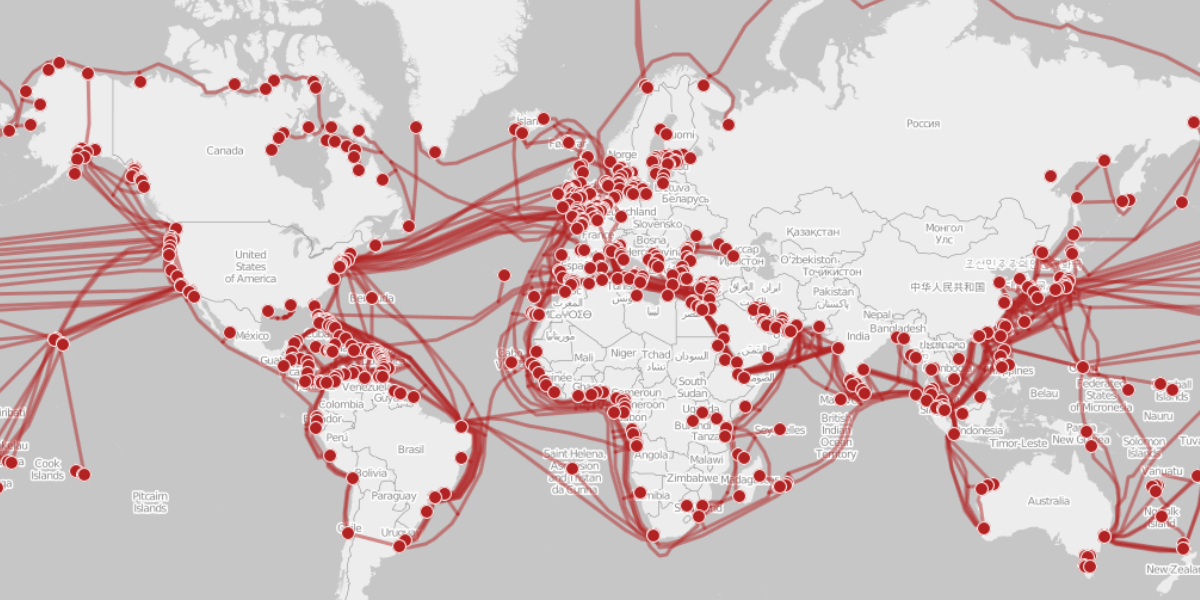
This begins to pose a question. Australia is now integrating AI into the same intelligence architecture, at scale, with allied data-sharing built in. What consultation has occurred with the Pacific states whose communications transit Australian-linked infrastructure? On the public record: none. Whether regional traffic is actually being swept up is unknown and FPR makes no claim that it is. The point is about consent; nobody has been asked.
The regulatory record. Fiji drafts its National Cybersecurity Strategy under a memorandum of understanding with Australia, one that extends to responsible AI. Australian regulatory templates shape Pacific banking, telecommunications, and online safety law. When Canberra becomes the first mover on AI standards, those standards acquire regional gravity whether or not any Pacific state adopts them formally. Fiji's own AI framework is sequenced for 2027, a year after Australia's rules are due in Parliament. The sequencing decides who writes and who inherits.
The resource record. The speech lists critical minerals among Australia's strategic advantages for AI. Papua New Guinea produces nickel and cobalt at Ramu and copper at Ok Tedi. Pacific waters hold the polymetallic nodules that seabed mining interests are positioning to extract. Where exactly the region's output flows matters: Ramu is 85 per cent owned by the Metallurgical Corporation of China, and its nickel-cobalt product has been exported to China under contract since production began in 2012. So PNG's minerals currently feed Beijing's supply chain, a fact that sharpens rather than blunts the point. But the strategic logic is public and stated. The AI buildout is a minerals buildout, the region holds minerals, and no benefit-sharing framework connects the two.
The cultural record. The speech's copyright promise is genuinely strong: Australian creative work protected from AI training without consent and compensation. It's also jurisdictionally bounded, and the boundary does work. Models must train on something. If Australian books, music and journalism sit behind a statutory wall, less protected corpora become the path of least resistance. Pacific languages, oral traditions and cultural knowledge have no equivalent wall. iTaukei oral tradition, meke, masi design, and vanua-held knowledge are protected by custom, not statute, and custom has no standing in the training pipelines of foreign AI companies. One country's copyright fortress can function as another region's open field.
A fifth channel, labour, is visible but less documented: Australia's education and mobility pathways already draw Pacific technical talent, and an AI boom concentrates that pull. FPR flags it as a pattern requiring data rather than a settled fact.
Four documented channels, one probable, and none of them mentioned. That's the record the silence sits on.
The Theory
Here the argument needs to be precise about what's new, because parts of it aren't.
Clinton Fernandes has spent years arguing that Australia is a subimperial power: a junior partner in the US-led order that acts as an enforcer and beneficiary within its own region. His 2022 book of that name describes PNG's sovereignty as contingent on the protection of Australian interests. Greg Fry's work on Pacific regionalism documents decades of Australia framing the islands to suit Canberra's purposes. And in 2019, Monique Mann and Angela Daly argued that Australia's big data practices already made it a "North-in-South" actor, a Global North state embedded in the Global South, continuing colonial patterns through information technology. They called it informational imperialism.
So the intellectual scaffolding exists. What doesn't exist is its application to what's happening now. Mann and Daly wrote before generative AI, before the data centre buildout, before training data became the world's most contested resource. Fernandes covers cyber through AUKUS but stops short of the digital economy. The data colonialism literature, Couldry and Mejias most prominently, targets Silicon Valley and Beijing, actors that dominate at planetary scale. Nobody has described the middle case: a regional power constructing AI sovereignty for itself while its dependent periphery supplies minerals, transit routes, unprotected training data, and silence.
Call it digital subimperialism. The term, as far as FPR can establish, is unclaimed. The structure it names was on full display in Sydney last week, and the speech is its clearest primary source, because the contradiction is native to the text. A leader warns against foreign monopolies controlling his country's digital future, while his country's regulatory, infrastructural and intelligence gravity over its own neighbours deepens without a word of acknowledgement. The sovereignty being defended and the hegemony being exercised are the same machine, viewed from different shores.
Silence is not sovereignty-respecting when your regulatory mass bends the orbit of smaller states regardless.
The theoretical gap matters for a practical reason. Frameworks determine what can be demanded. As long as Australia's AI project is described in the vocabulary of national sovereignty, the Pacific's exclusion is invisible, because sovereignty talk has no slot for the neighbours. A framework that names the subimperial structure creates the slot. It converts silence from an oversight into a policy choice that can be contested.
Which raises the only question that finally matters: contested how, and by whom?
The Sea
The Pacific has stood at this exact intersection before, facing a resource frontier, a technology gap, and larger powers writing rules among themselves.
In the 1960s and 70s, the world's maritime powers assumed the deep ocean and its resources belonged to whoever could reach them. Distant-water fleets fished Pacific waters at will. Seabed mining interests circled. Small island states had no navies, no capital, and no leverage anyone could see.
Through two decades of negotiation, Pacific and other developing states drove the concepts that became UNCLOS: the 200-nautical-mile exclusive economic zone, the archipelagic state, the common heritage of mankind, scale-invariant rules where Kiribati's 200 miles counted the same as America's. On 10 December 1982, when the convention opened for signature at Montego Bay, Fiji signed and ratified the same day, the first country in the world to do so. This early signature was a symbolic assertion that the Pacific had written its own rules for the ocean and not had them imposed by continental powers.
The result reshaped the planet's legal geography. States that couldn't build a single patrol boat acquired sovereign rights over ocean territory larger than continents. Tuna licensing, and later the Parties to the Nauru Agreement's vessel day scheme, turned that paper sovereignty into revenue that funds governments: from roughly US$60 million in 2010 to over US$400 million a year within six years of full implementation. The powerful complied, mostly, because the rules were universal and the alternative was lawlessness that hurt them too.
UNCLOS is the one precedent for small states forcing a framework onto larger powers before the extraction was complete. So the frontier question underneath everything here can be stated in one line.
Can the Pacific do to data what it did to the sea?
The disanalogy is worth stating first, the EEZ worked because fish and seabed minerals are physically located; jurisdiction could be drawn on a map. Data and compute are not located in the same way. Training data crosses borders at the speed of light, and the physical substrate of AI, the chips and gigawatts, cannot be conjured by treaty. It's possible that digital sovereignty simply isn't divisible below the threshold of compute, in which case the honest Pacific agenda is negotiating the terms of dependency: which patron, at what price, with what exit rights. That would be legitimate politics, a diminished one but worth testing.
Because the UNCLOS playbook doesn't require owning the fleet. It requires defining the resource, asserting the right, and making recognition cheaper than defiance. Three moves are available now.
First, define cultural and linguistic data as a sovereign resource. Aotearoa's Te Mana Raraunga principles and the broader indigenous data sovereignty movement have built the concepts: data as taonga, governance grounded in collective authority rather than individual copyright. Fiji has something the frameworks elsewhere lack, a living customary governance structure. The mataqali is the legally recognised landowning unit under the iTaukei Land Trust Act 1940, with membership recorded in the Vola ni Kawa Bula and no dealing in iTaukei land valid without its consent. The vanua is the broader relational and territorial concept within which the mataqali sits; it carries constitutional recognition but does not carry the same statutory proprietary standing. Extending the mataqali's recognised authority from land to knowledge is a legislative act, not a metaphysical one. Fiji's 2027 AI framework could do it first in the region.
Second, regionalise before the extraction matures. The vehicle for this already exists. The Pacific ICT Ministers' Dialogue signed the Lagatoi Declaration on digital transformation in Port Moresby in 2023, met again in Suva in August 2025 with Fiji as host, and is pushing to become a permanent regional mechanism. What's missing is the cargo: the Lagatoi Declaration's six priorities cover digital infrastructure, security and skills, and no AI-specific declaration, strategy or instrument has emerged from the Dialogue or the Forum on the public record. That gap is the single most fixable fact in this piece. The EEZ succeeded as a bloc position, not a national one. A declaration defining Pacific data as a shared resource, on the model of the Forum's 2021 declaration preserving maritime zones against sea-level rise, would cost little and establish the claim while the global rules are still wet. Fiji hosted the last Dialogue, which means Fiji sets the next agenda.
Third, put the question to Australia directly, in the one forum where it can't be avoided. The Vuvale Union gives Fiji standing to ask what no communiqué has yet asked: does Australia's AI framework recognise the Pacific as a stakeholder, or as a corridor? Pacific representation in the new Office of AI, protection of Pacific cultural IP with the same force as Australian IP, and benefit-sharing on minerals are specific, refusable requests. A refusal would itself be information; it would name the structure out loud.
None of this is guaranteed to work. In 1982 it wasn't either. What the sea precedent proves is narrower and more useful: that the gap between having no power and having no rights is exactly the space where small states have won before, and that Fiji, first to ratify at Montego Bay, has been first through that gap once already.
Albanese told his audience that a country dependent on someone else, somewhere else, will always be vulnerable. On his own logic, the Pacific's course of action writes itself. The region can wait to inherit the Australian standard, or it can do what it did the last time a frontier opened: get to the table before the rules are set, and sign first.
Sources
ABC News and Guardian Australia. Joint reporting on Australian Signals Directorate targeting of Indonesian President Yudhoyono's mobile phone, based on Snowden documents, November 2013. Reported contemporaneously by CNN.
AI Asia Pacific Institute. The State of Artificial Intelligence in the Pacific Islands. 2024.
Albanese, A. Address to the University of Sydney, 15 July 2026.
Australian Signals Directorate / Australian Cyber Security Centre et al. Five Eyes Cyber Security Agencies Statement on Artificial Intelligence. Joint statement of the cybersecurity agencies of Australia, Canada, New Zealand, United Kingdom and United States, 22 June 2026.
Ayres, T., Bowen, C. and Charlton, A. Joint media release: An Australian approach to AI: Expectations for data centres that deliver for Australians. Australian Government, 23 March 2026.
Carroll, S. R. et al. "The CARE Principles for Indigenous Data Governance." Data Science Journal 19(1), 2020. doi:10.5334/dsj-2020-043.
Commonwealth of Australia. Proceedings against Witness K and Bernard Collaery, Australian Capital Territory courts, 2018-2022.
Couldry, N. and Mejias, U. A. The Costs of Connection: How Data Is Colonizing Human Life and Appropriating It for Capitalism. Stanford University Press, 2019.
Fajgenbaum, E. "Empire's Upholder." New Left Review 149, September-October 2024.
Fernandes, C. Subimperial Power: Australia in the International Arena. Melbourne University Press, 2022.
Fry, G. Framing the Islands: Power and Diplomatic Agency in Pacific Regionalism. ANU Press, 2019. ISBN 9781760463144. Open access.
iTaukei Land Trust Act 1940 (Fiji). laws.gov.fj. Native Lands Act (Cap 133) (Fiji). PacLII.
King, C. et al. "Poipoia Te Kākano Kia Puāwai: The Operationalisation of Māori Data Sovereignty in Aotearoa — A Scoping Literature Review." Journal of the Royal Society of New Zealand, March 2026. doi:10.1002/snz2.70029.
Kukutai, T. and Taylor, J. (eds). Indigenous Data Sovereignty: Toward an Agenda. CAEPR Research Monograph No. 38. ANU Press, 2016.
Mann, M. and Daly, A. "(Big) Data and the North-in-South: Australia's Informational Imperialism and Digital Colonialism." Television & New Media 20(4): 379-395, 2019. doi:10.1177/1527476418806091.
Pacific Islands Forum. Declaration on Preserving Maritime Zones in the Face of Climate Change-Related Sea-Level Rise. Fifty-First Pacific Islands Forum, 6 August 2021.
Pacific Islands Forum Secretariat. Lagatoi Declaration on Digital Transformation. Pacific ICT Ministers' Dialogue, Port Moresby, 28 August 2023.
Te Mana Raraunga. Principles of Māori Data Sovereignty (Brief #1). October 2018.
United Nations Convention on the Law of the Sea. Opened for signature at Montego Bay, 10 December 1982. Fiji first state to ratify, 10 December 1982.
Walter, M., Kukutai, T., Carroll, S. R. and Rodriguez-Lonebear, D. (eds). Indigenous Data Sovereignty and Policy. Routledge, 2021.