One Tier, Repeatedly Redefined: The Bose Levu Vakaturaga Between Statute and Constitution
At Waikava in 1876, Sir Arthur Gordon added a Governor-chaired annual meeting to the vanua’s pre-existing chiefly architecture. 150 years later, the Bose Levu Vakaturaga Act 2026 and the Constitution Amendment Bill 2026 are adjusting the same tier. The lower tiers he inherited remain untouched.

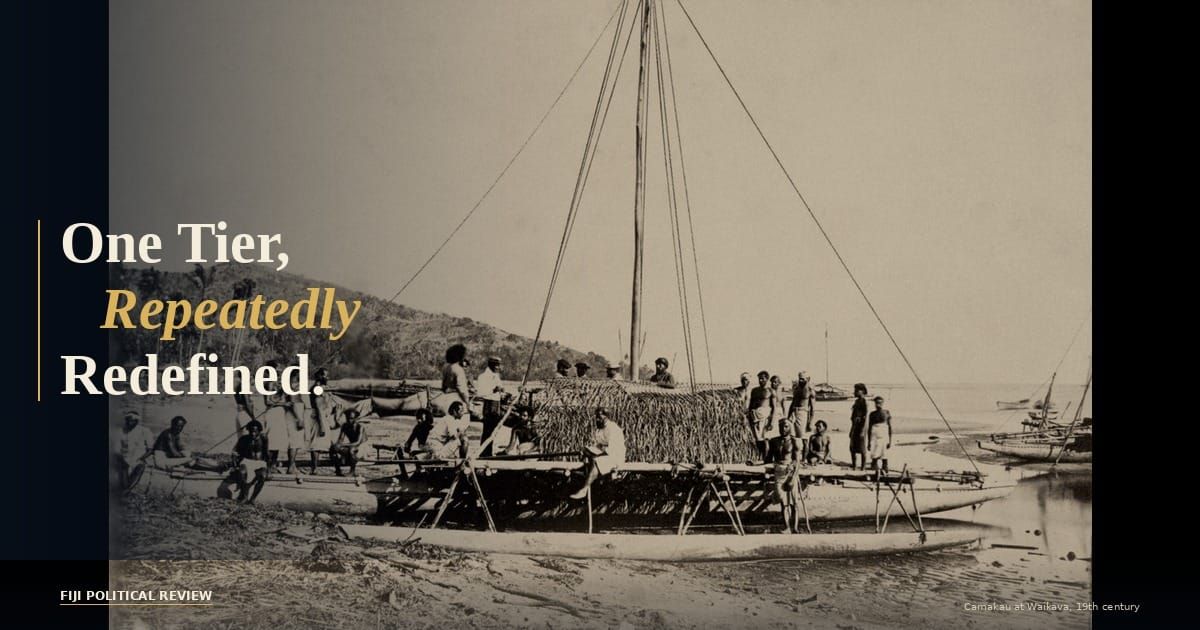
From Waikava 1876 to the 2026 Act and Constitution Amendment Bill
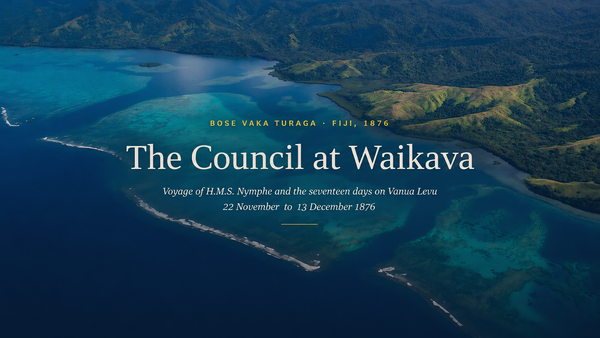
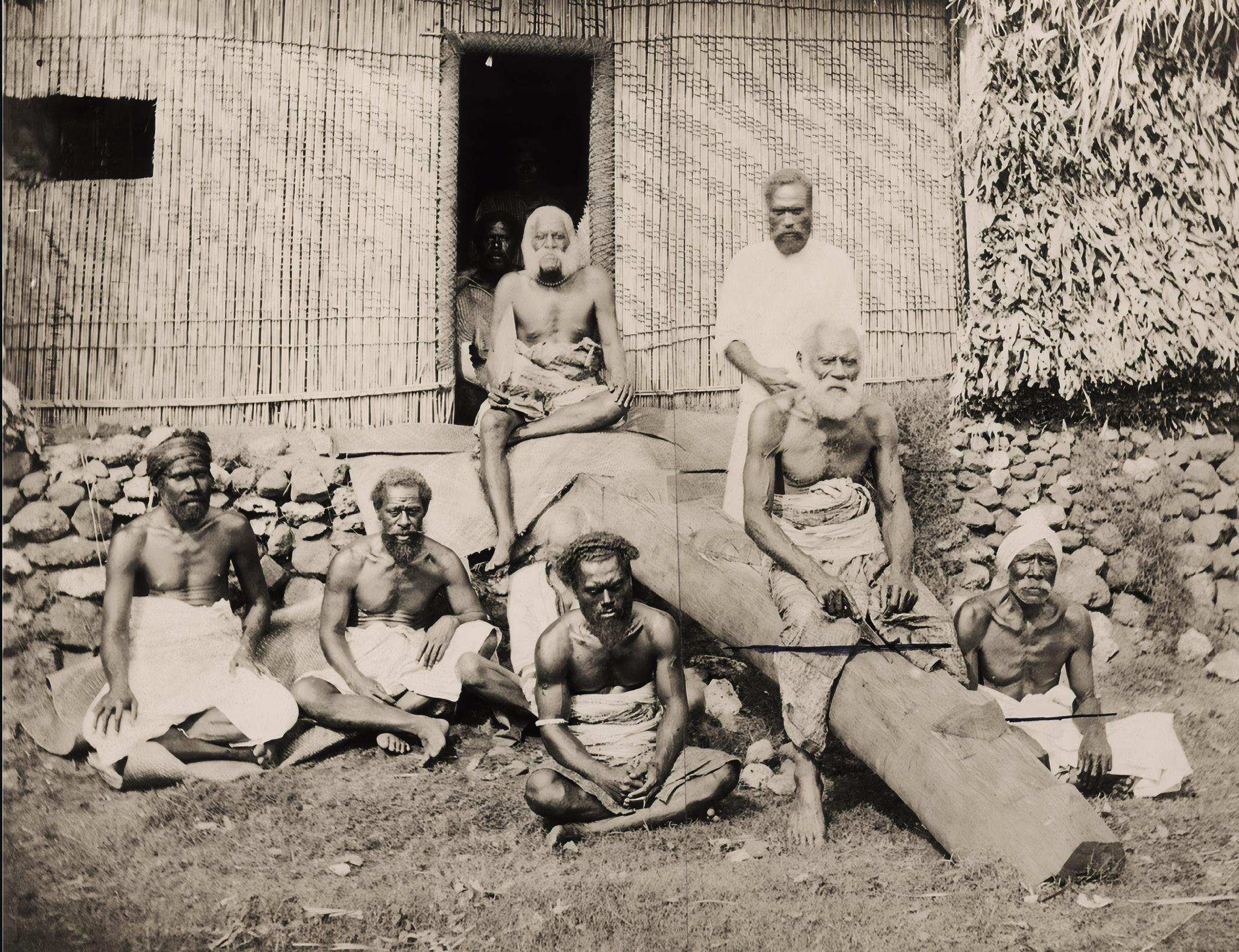
Sir Arthur Gordon's journal records that H.M.S. Nymphe reached Waikava on the Vanua Levu coast on 20 November 1876. Two days later, on Wednesday 22 November, Gordon landed under salute and formally opened the third annual Bose vaka Turaga in the big church. The Tui Cakau, Ratu Goleanavanua, received him. In attendance were twelve Roko Tuis, ten Stipendiary Magistrates, and thirty-six Bulis. Gordon delivered brief remarks in Fijian; his interpreter, Wilkinson, then read a longer address. The Council convened for seventeen days.
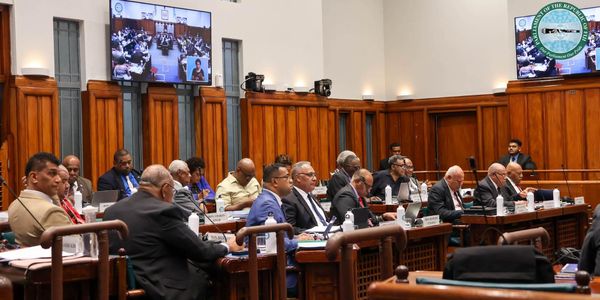
This meeting remains significant because its institutional framework continues to influence Fiji's constitutional politics. The Bose Levu Vakaturaga Act 2026, passed unanimously by Parliament on 1 October, and the Constitution Amendment Bill 2026, which cleared its second reading the next day, are the latest changes to a structure first established at Waikava. The current debate—whether to legislate, constitutionally entrench, or ratify the Bose Levu Vakaturaga by referendum—centres on an institutional tier Gordon introduced 150 years ago. His legacy is the authority to modify it.
The architecture Gordon inherited
The Council at Waikava was a vanua institution before it was a colonial one. The chiefly bose vakaturaga, the district bose ni tikina, the provincial bose vaka yasana, and the solevu as a mechanism of ceremonial distribution all pre-existed Cession and operated under vanua protocols. Gordon added only one: an annual meeting of the Roko Tuis with the Governor at the apex of this architecture. The pre-existing institutions were, in his own characterisation, "purely native, and of spontaneous growth."
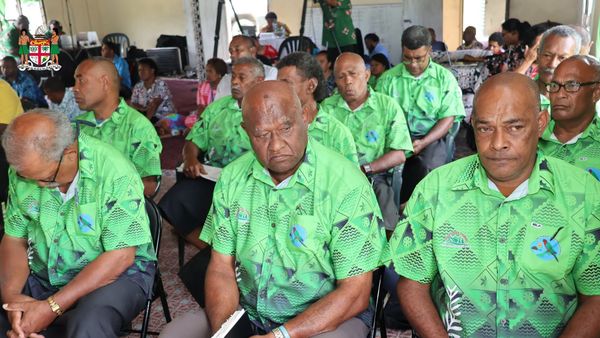
This structural distinction matters because the three lower tiers of the bose architecture continue in operation today as Village, Tikina, and Provincial Councils under the iTaukei Affairs Board. Abolition, executive decree, or legislative reconstitution has not interrupted their continuity. Only the apex tier, the Bose Levu Vakaturaga, has been subject to repeated state determination of its existence, composition, and functions: abolished by executive decree under the 2009 interim constitutional regime (2012), restored by ministerial regulation under the 2013 Constitution (2024), reconstituted by primary legislation (the Bose Levu Vakaturaga Act 2026), and now proposed for constitutional entrenchment under the Constitution Amendment Bill 2026.
Each successive constitutional regime has exercised the authority Gordon added at the Bau Bose vaka Turaga in September 1875. The three vanua tiers below the apex have continued to operate under their own protocols without similar legislative intervention.
The scale of what Waikava produced
Gordon's dispatch records sixty officially seated chiefs, approximately 270 additional attendees, and many uncounted others. With no shops in rural districts, feeding such a large assembly required months of coordinated agricultural preparation across provinces. Villages took turns supplying provisions according to rank. The Mata-ni-vanua of each province divided each day's supplies by rank. Gordon described the order and speed of distribution as "astonishing."The Council's deliberations addressed issues ranging from magistrates' courts and sandalwood cutting to birth registration. Gordon clarified the legal process: the Bose had no legislative power and only made recommendations. A Board, composed of both Europeans and Fijians, drafted Regulations based on these recommendations. The Board then submitted these Regulations to the Legislative Council, where they could become law.
In practice, the situation differed. "Though possessing no direct legislative authority," Gordon wrote, "it is impossible not to see that such a body as the Vei Bose vaka Turaga wields far more influence on the course of legislation than can be enjoyed by half-a-dozen natives sitting as members of a legislature otherwise composed wholly of white men." The colony's Regulations for iTaukei were based on the Bose's recommendations and structure, with only those changes Gordon considered "manifestly objectionable" removed. The vanua's law, or the state's version of it, was effectively being created at the Bose.
Gordon also observed a notable procedural development. When issues affected the broader community, minor chiefs formed a committee led by an elected president and reported back to the Rokos. He described this as "an elementary separation of the assembly into two 'houses', the more remarkable because perfectly natural and spontaneous." This spontaneous bicameralism, arising internally without colonial influence, demonstrates that the Bose was not simply adopting Westminster forms but was developing its own.
The solevu
Gordon returned to Waikava on 9 December to close the Council. On 12 December, despite the rain, Ratu Goleanavanua, the 8th Tui Cakau, presented him with a Cakaudrove-style masi over 300 feet long, carried by followers. According to Gordon's journal: "This was taken off and laid at my feet." Alfred Maudslay, then Colonial Secretary and present at the ceremony, recalled it differently fifty years later: "the train was dropped, and he walked away without it."
Both accounts describe the same gesture. In the solevu gift economy, walking away from the masi signifies its transfer to the Governor. The 300 feet of cloth is now held at the University of Cambridge's Museum of Archaeology and Anthropology as Z 3862 and Z 30618. According to the museum, the crosses in the border may symbolise Tui Cakau's conversion to Christianity.
The next day, Gordon closed the Council, accepted the Chiefs' letter to the Queen, appointed Bulis and Magistrates, and departed for Nasova.
A Fijian voice
The historical record of Waikava is predominantly European, as seen in Gordon's journal, Wilkinson's translations, Lady Gordon's letters, the Council's Regulations, and Maudslay's later memoir. This pattern continues in the current constitutional debate, which is led mainly by male legislators, legal commentators, and state actors, almost exclusively in English. Fijian women's perspectives on the institution remain largely absent, both historically and today.
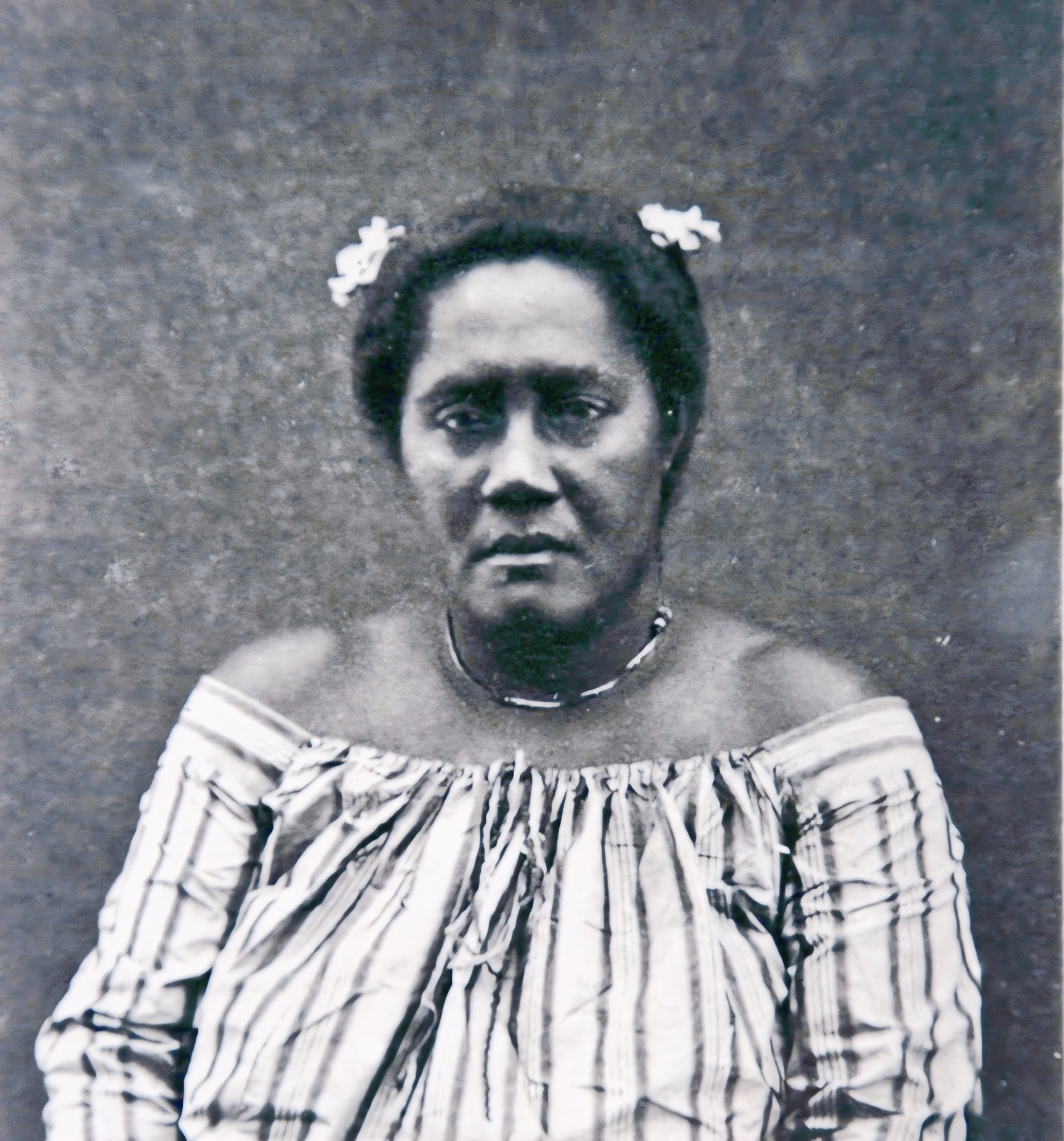
Volume 2 of Gordon’s Records reproduces one exception. Adi Arieta Kuila wrote to Lady Rachel Gordon from Waikava on the day the Council closed, 13 December 1876. She was the eldest daughter of Ratu Seru Cakobau and Adi Samanunu. Gordon’s edited volume reproduced her letter under the name his editorial hand gave her: “The Lady Harriet Kuila.” It reads in part:
"I take this paper to write hence to you. I wish to recount to you, the Lady of Nasova, what followed the meeting. The mekè of the women was a great thing, and also that of the men. The presents of food were very large, and had we remained any longer there would have been but little to eat. Again, the bathing-place is very far off, and the heat is great, also there are many flies. The amount of Fijian property displayed was enormous, and also the Governor's gifts were great... My gossip is over. I send my love to both of you ladies at Nasova as well as to the children. It is finished. I, The Lady Harriet Kuila."
The letter provides specific details about the solevu ("the amount of Fijian property displayed was enormous"), practical inconveniences such as the bathing place, heat, and flies, and the Governor's family's travel plans. What Adi Kuila calls "gossip" is now one of the few primary sources reflecting a Fijian woman's perspective on the gathering that influenced the framework Fiji is currently revising.
The letter exists today because Gordon published it in a household register, translated as women's correspondence. The gender structure of the archive then mirrors that of current policy debates. As the Constitution Amendment Bill's BLV chapter advances, most voices in the parliamentary record will be men speaking in English. Adi Kuila's letter highlights what the archive often omits.
Why Waikava, not Rewa
Gordon's own retrospective judgment was that Waikava was "still very incomplete, and worked heavily." The chiefs were uncertain whether the Council would continue. Confidence in the institution came only the following year at Rewa, which sat for twenty-five days and where, in Gordon's words, "for the first time the idea that the Bose had become a permanent institution seemed to be grasped by those taking part in it."
At Rewa in 1877, participants recognised the Bose as a permanent institution. In contrast, Waikava in 1876 marked the Council's first full ceremonial and material expression. The seventeen-day duration, four participant ranks, structured daily sittings, formal reports from the Rokos, closing distributions and appointments, and the solevu were all fully realised at Waikava.
The structure was established at Waikava before participants fully trusted the institution.
The framework now
State interventions affecting the Bose Levu Vakaturaga have consistently operated at the highest level Gordon established. These include colonial regulations (the 1927 Native Administration Regulations), post-war Fijian Affairs legislation, executive decree under the 2009 interim constitutional order (the 2012 abolition), ministerial regulation under the 2013 Constitution (the 2024 restoration), and primary parliamentary legislation (the Bose Levu Vakaturaga Act 2026, enacted on 1 October). The Constitution Amendment Bill 2026 proposes to grant the institution its own constitutional chapter, with authority to appoint the President and Vice-President and to advise on the appointment of fourteen of twenty-three Senate seats. Enactment requires a two-thirds majority in Parliament at the third reading and approval by 75% of registered voters in a referendum, as outlined in section 160 of the 2013 Constitution.
Each intervention has treated the Bose Levu Vakaturaga as an institution defined by state authority rather than by vanua process. This approach began with Gordon's 1875 introduction of a Governor-chaired apex into the existing chiefly assembly. The vanua tiers below—the village bose, bose ni tikina, and bose vaka yasana—existed before Cession and followed their own protocols. Gordon's addition created a new tier dependent on colonial authority. Successive constitutional regimes have continued to define, redefine, abolish, or reconstitute this tier, while leaving the three Fijian tiers unchanged.
Waikava was the first setting where this structural arrangement operated fully, both ceremonially and materially. The vanua tiers organised the seventeen-day gathering, coordinated provincial provisioning, led the solevu on 12 December, and sent the chiefs' letter to the Queen. The state tier brought the Governor's attendance, recommendations incorporated into colonial regulations, and the appointment of Bulis and Magistrates at the conclusion. Both tiers functioned, but only the state tier has since been repeatedly reconstituted by statute.
The structural division between vanua process and state determination, highlighted by Waikava in 1876, continues to shape the current constitutional debate. Both the Bose Levu Vakaturaga Act 2026 and the proposed constitutional entrenchment under the Constitution Amendment Bill 2026 assume that the state determines the constitutional status of the Bose Levu Vakaturaga. Clause 3 of the Act describes the institution as "pre-existing and subsisting independently of this Act." During the Bill's passage, the BLV's submission to Parliament highlighted the tension with Clause 4, asking "whether Parliament recognised an ancient institution, or is creating a new statutory body." This assumption is not necessary. It is inherited.
This is an FPR analysis of the structural inheritance behind Fiji’s current constitutional debate on the Bose Levu Vakaturaga. See also FPR’s Portrait of Sir Arthur Gordon (October 2026), the Portrait of Ratu Sir Josefa Lalabalavu Sukuna (May 2026), and Ceremony as Constitution: The Tui Nayau and the Limits of Written Sovereignty (September 2026).
References
Primary sources
Sir Arthur Gordon (Lord Stanmore), Fiji: Records of Private and of Public Life 1875-1880, Volume 2. Edinburgh: R. and R. Clark, 1897. National Library of Australia. Chapter XII, "The Waikava Council and Native Councils in Fiji Generally."
Adi Arieta Kuila (reproduced as “The Lady Harriet Kuila”), letter to Lady Rachel Gordon, Waikava, 13 December 1876, in Fiji: Records of Private and of Public Life 1875-1880, Volume 2, page 245.
Alfred Maudslay, Life in the Pacific Fifty Years Ago. London: George Routledge and Sons, 1930, page 153.
Jane Roth and Steven Hooper (eds), The Fiji Journals of Baron Anatole von Hügel 1875–1877. Suva: Fiji Museum in association with Cambridge University Museum of Archaeology and Anthropology, 1990.
Museum of Archaeology and Anthropology, University of Cambridge, catalogue records for Z 3862 and Z 30618 (Cakaudrove gatu vakaviti presented by Tui Cakau to Sir Arthur Gordon, 12 December 1876).
F.H. Dufty, photograph of senior members of the Great Council of Chiefs at Waikava, December 1876. Cambridge Museum of Archaeology and Anthropology P.99842.VH.
F.H. Dufty, studio portrait of Adi Arieta Kuila, c. 1875. Cambridge Museum of Archaeology and Anthropology P.99843.VH. Identification: Fergus Clunie, 14 July 2003.
Bose Levu Vakaturaga, submission to Parliament on the Bose Levu Vakaturaga Bill 2026, reported in Great Council of Chiefs wants faster path to restoration, Fiji Sun, 20 September 2026.
Legislation and regulations
Constitution of the Republic of Fiji 2013, section 160 (amendment procedure).
Constitution Amendment Bill 2026 (Fiji), Bill No. 32 of 2026, Parliament of Fiji, 150 pp. Tabled for first reading on 30 September 2026; cleared second reading on 2 October 2026.
Bose Levu Vakaturaga Act 2026 (Fiji), passed by Parliament 1 October 2026, Clauses 3 and 4.
iTaukei Affairs (Great Council of Chiefs) Regulations 2024 (Fiji).
iTaukei Affairs Act (Cap 120) (Fiji).
Related FPR analysis
The Framework Gordon Left Behind: Sir Arthur Gordon in Fiji, 1875-1880, Fiji Political Review, October 2026.
From the Hospital at Lyon: Ratu Sir Lala Sukuna, Fiji Political Review, May 2026.
Ceremony as Constitution: The Tui Nayau and the Limits of Written Sovereignty, Fiji Political Review, September 2026.