Three provinces, one question: what the Constitution calls the iTaukei
Serua, Kadavu and Lau made formal submissions to the committee on Fiji's Constitution Amendment Bill. Kadavu and Lau back the Bill. Serua and Lau both object to the name it gives the iTaukei. Why that question may outlast the vote.


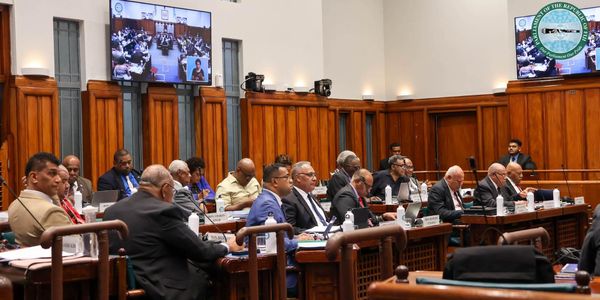
For a little over two weeks in October, Fiji's Special Committee on the Constitution (Amendment) Bill 2026 travelled the country. Chaired by Prime Minister Sitiveni Rabuka, it held at least 20 public consultations, from Navua to Somosomo, Kadavu to Levuka, before closing in Suva on 30 October.
Most of the people who spoke did so as individuals. A small number spoke for something larger: a provincial council, or the chiefs of a province. The public record shows three such submissions: from the Serua Provincial Council, the chiefs of Kadavu and the Vanua o Lau.
Three is a thin sample, and it would be a mistake to read it as the voice of the vanua as a whole. It's still revealing. Kadavu and Lau want the 2013 Constitution gone. Serua and Lau both say the Bill's term for the Indigenous people won't do. Both Kadavu and Lau told the committee they support the Bill.
Three voices on record
Serua Provincial Council went first. On 17 October in Navua, Provincial Council chairman Tevita Boseiwaqa put a detailed, practical case: the State and landowners as co-owners of resources, ideally 50/50; the iTaukei language compulsory from kindergarten; a "Bill of Rights and Responsibilities"; and a different name for the iTaukei. Coverage doesn't record whether Serua backed the Bill as a whole.
Kadavu's submission, made at Namuana village on 28 October, was brief, according to Parliament's own account of the session. The Turaga na Tui Naceva, Ratu Jona Nawakalukalu, told the committee that Kadavu supports the changes proposed in the Bill. The decision of the province's chiefs was put in one sentence: "Sa lewa na bose vanua vakaturaga o Kadavu me biu vakatikitiki na 2013 Constitution", the chiefs of Kadavu want the 2013 Constitution put aside. It was the only submission received at the Namuana session.
Vanua o Lau came last, and at length. Read on behalf of the Tui Nayau, Ratu Tevita Uluilakeba Mara, it supported the Bill and asked that it proceed to its third reading. It backed Clause 50's entrenched protection of iTaukei land, and the restoration of the Senate and the Bose Levu Vakaturaga under Clause 76. It asked for two changes: on the name, and on how a constitution may be replaced.
The naming question
The Bill would keep "Fijian" for every citizen and refer to the Indigenous people as "iTaukeinivanua o Viti". It is the one point on which these submissions converge, and the convergence runs against the drafting.
Serua asked for "iTaukei Fiji" or "Fijian iTaukei". Lau asked for more: that Clause 6 restore "Fijian" as the ethnic name of the Indigenous people, and adopt "Fiji Islander", the Reeves Commission's 1996 recommendation, as the common name for all citizens. Its reasoning was historical. The name was removed by decree in 2010 and extended to all citizens in 2013, "without their consent too", and "a matter determined without consent is not settled."
The objection wasn't confined to chiefs. At Wailotua in Wainibuka, Waisake Rabulia of Naibulini told the committee that "iTaukei" already does the job, and the new term should go: "It doesn't make sense at all."
Why does this matter more than its size suggests? Because it is the part of the 2010 to 2013 settlement that the Bill leaves largely intact. The Bill restores the Senate, the Bose Levu Vakaturaga and the entrenchment of land law. On identity, it keeps "Fijian" as the common name and settles for a new label. Lau called it "the one significant constitutional question left unresolved". On the evidence of these submissions, it's the question most likely to outlast the Bill, whichever way the vote goes.
Lau's wager
Vanua o Lau's statement is the most fully argued of the three, and the most politically pointed. It makes a wager: that a flawed Bill put to the people is worth more than a better one that never arrives.
Its case rests on consent. The 2013 Constitution "was never put to the people"; this Bill will be, at Fiji's first constitutional referendum. That alone, Lau argued, "is worthy of support". It answered the complaint that consultation was rushed by measuring the process against 2013, when "there was no assembly" and "no referendum". On that measure, it said, consultation was adequate.
It was equally careful about what it wouldn't press. On immunity, Lau kept the view it put to the Constitution Review Commission in July, but argued that the immunities are carried over from 2013 and that "voting this bill down would not remove them." Its two requested changes came with the same qualification: neither was a reason to oppose the Bill.
The closing words were addressed to the coalition partners. "We know some of you sit uneasily with parts of this bill," the statement said. "We do not think it is a close question. The bill is far and away the better of the two." It ended with a warning, framed as counsel: when the Indigenous people are not secure in their land, a settlement "becomes fragile. When it fails, it fails for everyone."
This places the Tui Nayau, who has spent the year urging caution on the Vuvale Union treaties and on immunity, firmly behind the Government's timetable on the Constitution. Lau has not been an uncritical voice in 2026. On this question it has chosen to back the process and argue for its amendments from inside it.
The quieter provinces
What the record doesn't show matters as much as what it does. We found no published report of a formal submission from Fiji's other 11 provinces, from the Kubuna, Burebasaga or Tovata confederacies, or from the Council of Rotuma.
Some caution is due. The sessions were livestreamed and written submissions closed on 23 October, so coverage may simply have missed them. Absence from the news isn't absence from the committee's record.
Elsewhere in the consultations, the same themes surfaced. In Namara, Tailevu, Mata-ni-Tikina Sekaia Mua asked for formal recognition of the GCC and provincial seats in the Senate. In Wainibuka, Livai Koroitamana said chiefs should have "a greater role in making laws". Immigration Minister Viliame Naupoto asked that the Vola ni Kawa Bula be recognised in Chapter One as "a record of belonging".
At the national level, the Great Council of Chiefs' chairman, Ratu Viliame Seruvakula, was reported on 20 October as saying the process had not been rushed. That puts the GCC and Lau on the same side of the timing argument, against the Fiji Law Society and the National Federation Party, both of which wanted more time.
Other voices warned against reading identity as a zero-sum question. In Somosomo, Ram Sidal, chairman of the Taveuni Advisory Council, supported change but said Indigenous recognition "should not be used to create divisions". Lau made a similar point in its own terms: "Nationality should unite every citizen; ethnicity should remain with each community that holds it."
Rotuma's concern was more specific. At the island's consultation on 23 October, Parliament reported, speakers asked for the immunity clause to be removed, more development assistance, better medical facilities and protection of customary rights and resources. Rosarini Fonmoa asked Rabuka for an assurance that Chapter 9, the part of the Bill dealing with Rotuma, would be "included and never removed". That chapter would recognise Rotuma as a "sovereign indigenous entity within the Republic of Fiji" and open a path to self-determination, as FBC has reported. Viliame Fatiaki thanked the committee "for considering the island of Rotuma". Rabuka's reply was blunt: if the Bill fails in Parliament in November, the process stops.
Towards December
The committee reports to Parliament on 2 November. The third reading and vote are expected later that week, the referendum writ around 9 November, and polling on 9 December, according to the Fiji Sun.
Three things are worth watching closely. First, whether the committee's report takes up the naming question. It's the one change Serua and Lau both asked for, and Lau framed its version as negotiable: "If Parliament prefers another name, we will not object." That leaves the committee room to move.
Second, the report itself. At Namuana, Rabuka told Kadavu that submissions from around the country would be reviewed and tabled in Parliament at next week's sitting. How the report treats these submissions, and whether it records the naming objection at all, will show how much weight the provincial councils and the vanua carried.
Third, the coalition. Lau addressed its closing words to the House, "and particularly to the partners in this coalition government." One reading is that the chiefs of Lau see the greater risk to the Bill inside the Government's own ranks. If the Bill clears Parliament, Lau's argument moves to the polling booth, where, as the Vanua o Lau put it, "the people will at least have been asked."
Sources
- Lau chiefs urge MPs to let Fijians decide on Constitution, Fiji Sun, 30 October 2026
- Lau supports Constitution Bill and Fijian for indigenous people, Fijivillage, 30 October 2026
- Kadavu wants 2013 Constitution removed, Fijivillage, 28 October 2026
- Constitution Bill Public Consultation, Fijivillage (rolling coverage)
- Remove 'iTaukei ni Vanua' name from draft, proposes villager, Fiji Sun
- 'Chiefs should have greater say in law-making', Fiji Sun, 23 October 2026
- Naupoto pushes for VKB protection, FBC News, 23 October 2026
- Reject racial hate, Taveuni consultation told, Fiji Sun, 28 October 2026
- GCC backs inclusive constitutional review, Fiji Sun, 20 October 2026
- Navatu honours constitution amendment committee, FBC News, 26 October 2026
- Constitution Bill heads to third reading next week, Fiji Sun, 30 October 2026
- PACNEWS TWO, 15 October 2026, Islands Business
- Constitution Amendment Bill proposes Fijian to continue as common name, Fijivillage, 30 September 2026
- Tui Nayau calls for Parliament to withhold approval of treaties, Fiji Sun
- Parliament of the Republic of Fiji, Facebook post on the Kadavu consultation at Namuana village, 28 October 2026
- Parliament of the Republic of Fiji, Facebook post on the Rotuma consultation, 23 October 2026