Parliament Passes Rights of Indigenous Peoples Bill
Fiji’s Parliament has passed the Rights of Indigenous Peoples Bill 2025, giving effect to UNDRIP in Fijian law through a National Action Plan.

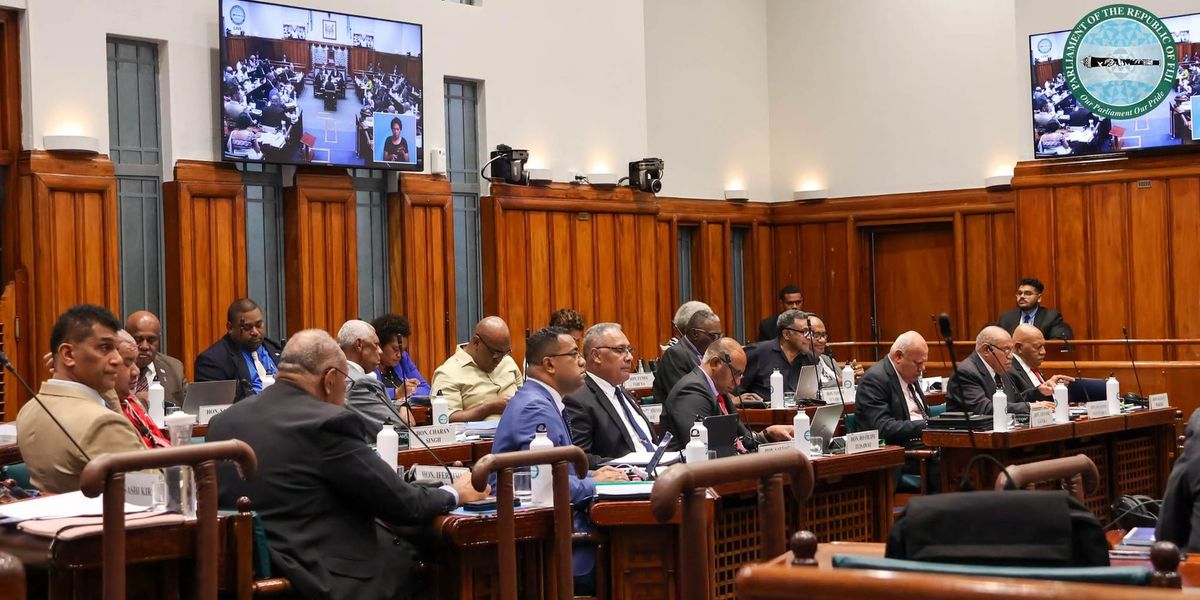
Parliament has passed the Rights of Indigenous Peoples Bill 2025 at third reading, without objection, on 2 November 2026. The Bill, moved by the Minister for iTaukei Affairs, Ifereimi Vasu, creates a statutory framework for giving effect to the United Nations Declaration on the Rights of Indigenous Peoples (UNDRIP) in Fijian domestic law through a National Action Plan.
The vote is significant for two reasons: passage without objection of a Bill of this constitutional importance is rare, and it occurred on a day when the expected third reading of the Constitution (Amendment) Bill 2026 was postponed. Both Bills shape the iTaukei rights framework, but only one reached a vote on 2 November 2026 and passed with cross-bench support.
Fiji endorsed UNDRIP after the UN General Assembly adopted it on 13 September 2007. The Declaration contains 46 articles setting out the rights of indigenous peoples, including self-determination (Article 3), autonomy in internal and local affairs (Article 4), Free, Prior and Informed Consent on matters affecting indigenous lands and resources (Articles 10, 19, 28, 29, 32), rights to traditionally owned lands, territories and resources (Articles 25 to 27), and a sovereignty caveat (Article 46).
For nineteen years, Fiji politically endorsed UNDRIP without legal effect. The 2 November 2026 vote gives it enforceable status in domestic law.
The National Action Plan
The Bill will be implemented through a National Action Plan. At the third reading, Minister Vasu outlined five objectives for the Plan: addressing discrimination and promoting indigenous peoples' rights; protecting cultural heritage, traditional knowledge, and customary practices; ensuring fair participation in benefits from natural resources; reviewing laws affecting indigenous interests; and strengthening accountability through regular reports to Parliament.
The Plan will be developed in consultation with the Bose Levu Vakaturaga, the iTaukei Affairs Board, indigenous communities, women, young people, and persons with disabilities. Under section 5(1) of Bill 37, read with the section 2 definition of "Council," the Great Council of Chiefs is statutorily named as one of the Minister's two required consultation partners for the Action Plan preparation, alongside the iTaukei Affairs Board. The Minister emphasised: "Consultation must be meaningful, not just a formality."
The Minister defined success in substantive terms: "The success of this law will not be measured only by its passage. It will be measured by the quality of the Action Plan, how widely and honestly people are consulted, and whether indigenous people see a real difference in their lives."
What this means for existing legislation
The Bill does not supersede existing Fijian statutes. Reviewing laws affecting indigenous interests constitutes one of the five Action Plan objectives. This places the Mining Act (Cap 146), the Crown (State) Lands Act (Cap 132), and the iTaukei Land Trust Act (Cap 134) under review, but does not amend them.
Section 3(1) of the Mining Act, vesting all minerals in the State, remains in force. The Crown (State) Lands Act vesting of the foreshore in the state, following the doctrine Sir Arthur Gordon set out in 1877, remains in force. The iTaukei Land Trust Board's May 2026 submissions to the Fiji Law Reform Commission, seeking the return of foreshore, waterbed and mineral ownership to iTaukei landowners, now have a review mechanism to pass through: the National Action Plan.
Whether UNDRIP Article 32's Free, Prior and Informed Consent standard becomes enforceable domestic law will depend on the Action Plan's recommendations, Parliament's response, and future court interpretations. The Rights of Indigenous Peoples Bill 2025 creates the pathway but does not itself implement these changes.
The uncontested vote
Bill 32 passed its second reading on 2 October 2026 with 38 votes for, 5 against, and 9 abstentions. Its third reading, scheduled for 2 November 2026, was postponed after Parliament passed a motion to extend the Special Committee's deadline. The Rights of Indigenous Peoples Bill 2025 passed its third reading on 2 November 2026 without objection.
The contrast is procedural and reveals a political posture. On Bill 32, the Opposition's position is uneven. SODELPA has stated it does not support the Bill in its current form. NFP opposed the Special Committee deadline extension motion. The Opposition Leader supported the extension motion but has not endorsed the Bill. On the Bill giving UNDRIP statutory force, the vote proceeded as scheduled and passed without objection, with Opposition MPs engaging substantively on implementation rather than opposing the Bill. The two Bills attract different political treatments in the current Parliament, and the Rights of Indigenous Peoples Bill is the one that commands cross-bench support.
The Government's iTaukei portfolio holders, chiefly institutions, and the Fiji Law Reform Commission have worked toward a statutory UNDRIP framework for several years. The uncontested vote suggests this political groundwork was laid in advance. Substantive outcomes will take longer to emerge.
What FPR is watching
- The reasons for the Bill 32 third reading postponement, and the rescheduled sitting date
- Gazette publication of the Bill as an Act, and the commencement date
- The timeline for development of the National Action Plan, and the terms of reference for the consultations
- Whether the Bose Levu Vakaturaga is given a specific role in the Action Plan
- The Action Plan’s review of the Mining Act, the Crown (State) Lands Act, and the iTaukei Land Trust Act
- The Attorney-General Sevuloni Valenitabua’s position on the Act’s operation across existing statutes
The FPR position
The passage of the Rights of Indigenous Peoples Bill 2025 without objection is the most significant iTaukei rights legislation since independence. However, its impact will be determined by the National Action Plan, not the Bill itself. The Bill establishes the framework; the Plan will determine how UNDRIP's 46 articles are translated into enforceable Fijian rights.
Minister Vasu's measure of success is appropriate: whether indigenous people experience real improvements in their lives. Achieving this will depend on the quality of consultation, the Plan's ambition, the Government's willingness to amend existing statutes, and the Courts' interpretation of the law.
FPR will provide detailed coverage once the Bill is Gazetted as an Act and the Action Plan consultation framework is released.
Sources
Legislation
Rights of Indigenous Peoples Bill 2025 (Bill No. 37 of 2025) (Fiji), passed at third reading without objection, 2 November 2026. Section references in this piece are to Bill No. 37.
Constitution (Amendment) Bill 2026 (Fiji), second reading 2 October 2026 (38 for, 5 against, 9 abstentions); third reading postponed from 2 November 2026.
Mining Act (Cap 146) (Fiji), s 3(1).Crown (State) Lands Act (Cap 132) (Fiji).
iTaukei Land Trust Act (Cap 134) (Fiji).
International instruments
United Nations Declaration on the Rights of Indigenous Peoples, adopted by UN General Assembly Resolution 61/295, 13 September 2007.
Public statements
Hon. Ifereimi Vasu, Minister for iTaukei Affairs, third reading statement on the Rights of Indigenous Peoples Bill 2025, Parliament of Fiji, 2 November 2026.
Related FPR analysis
The Framework Gordon Left Behind: Sir Arthur Gordon in Fiji, 1875-1880, Fiji Political Review, October 2026.
iTaukei Land Legislation and Vanua Consent: The Framework the Constitution Delegates, Fiji Political Review, September 2026.